
Does an Agricultural Exemption Transfer When You Buy Acreage in Johnson County, Texas?
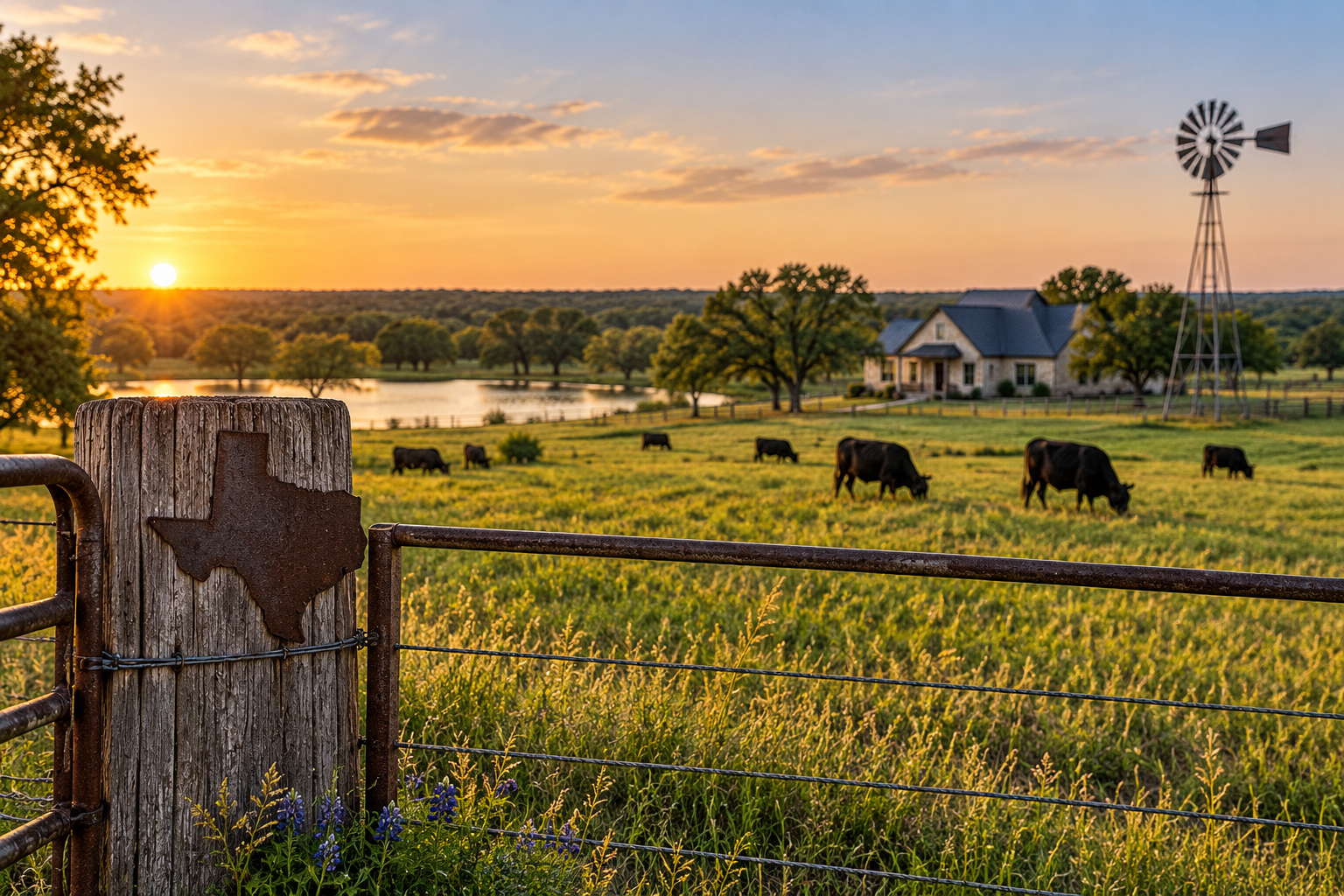
Short answer: Don't assume that an “ag exemption” automatically follows the land when acreage changes ownership. What Texans commonly call an ag exemption is generally a special agricultural or open-space appraisal based on productivity rather than a blanket tax exemption, and the new owner needs to understand the property's qualification history, intended use, local appraisal requirements, and potential rollback-tax consequences before purchasing.
This is one of the most misunderstood parts of buying acreage around Cleburne, Godley, Joshua, Grandview, Alvarado, and rural Johnson County.
A listing may advertise:
“AG EXEMPT!”
That's useful information.
But it shouldn't end your investigation.
Is an “ag exemption” actually an exemption in Texas?
Usually, that's not the most accurate terminology.
The Texas Comptroller of Public Accounts explains that qualifying agricultural and open-space land may be appraised according to its productivity value rather than market value. That productivity value is usually lower than market value.
That's why you'll often hear agents, owners, and buyers call it an “ag exemption.”
But you're generally talking about a special appraisal of qualifying land.
The distinction matters because buyers sometimes hear “exempt” and mistakenly assume the property simply doesn't have property taxes.
It does.
Does acreage qualify simply because it's in the country?
No.
This is one of the most important things an acreage buyer can understand.
The Comptroller's agricultural appraisal manual states that land doesn't qualify simply because it's rural, open, or loosely connected to agriculture. The owner has to establish the applicable statutory requirements.
For common 1-d-1 open-space agricultural appraisal, the Comptroller identifies requirements including current principal agricultural use at the generally accepted degree of intensity and a qualifying history of agricultural or timber production—generally at least five of the preceding seven years, with additional considerations for certain property within incorporated areas.
So:
“It's 10 acres” does not automatically equal “it qualifies for ag.”
Neither does putting a couple of animals on it after closing.
What should I verify before buying ag-appraised acreage?
Before assuming the current tax treatment will continue, investigate:
| Question | Why it matters |
|---|---|
| Is the land currently receiving special agricultural appraisal? | Verify the listing claim. |
| What portion of the tract qualifies? | The residence/homesite may be treated differently. |
| What agricultural use supports qualification? | Your intended use may differ. |
| What is the qualification history? | History can affect continued eligibility. |
| What degree-of-intensity standards apply locally? | Standards can vary by area and use. |
| What must a new owner file? | Ownership changes can trigger application requirements. |
| Will your planned use change qualification? | A non-agricultural change can create tax consequences. |
| Could rollback taxes apply? | This can be financially significant. |
For Johnson County property, the appropriate local authority is the Central Appraisal District of Johnson County. Its published information directs agricultural-appraisal questions to its agricultural department, and its office is in Cleburne.
What happens after I purchase acreage already receiving agricultural appraisal?
Don't assume the seller's paperwork simply becomes yours forever.
The buyer should verify the process with the appraisal district.
Johnson County CAD's published taxpayer information has specifically advised that new owners of property already receiving agricultural treatment receive an agricultural application. Procedures and deadlines can change, so confirm the current requirements for the tax year in which you purchase rather than relying on an old listing, previous owner's paperwork, or what somebody remembers doing five years ago.
That's one reason we recommend treating the appraisal district as part of your acreage due diligence.
What are rollback taxes?
This is where the subject becomes much more important than simply saving money on annual property taxes.
The Texas Comptroller explains that when qualifying agricultural land changes to a non-agricultural use, a rollback tax can apply.
For qualifying open-space agricultural land, the Comptroller currently describes that rollback as the difference between taxes paid on the agricultural value and taxes that would have been paid based on the higher market value for each of the previous three years, subject to applicable statutory exceptions.
That means your future plans matter.
Suppose you're buying acreage because you eventually want to:
- subdivide it,
- develop part of it,
- build additional residences,
- convert it to a commercial use, or
- stop the agricultural activity supporting its qualification.
Those plans deserve investigation before closing, not after you own the land.
Does the house receive the agricultural appraisal too?
Don't assume it does.
Texas appraisal guidance distinguishes qualified open-space land from improvements and residential portions of rural property. The Comptroller's classification guidance notes that residences and the nonqualifying rural land directly attributed to residences are treated separately from qualifying open-space acreage.
This explains why looking only at an acreage property's current total tax bill can be misleading.
Ask for the actual appraisal record.
How does this fit into the rest of acreage due diligence?
Agricultural appraisal is only one piece.
A Johnson County acreage buyer may also need to investigate:
Survey and boundaries — Is there a current survey, and do the fences actually follow the boundary?
Access and easements — Does the property have appropriate legal and physical access?
Water — Rural water or private well? The Texas Water Development Board recommends investigating well records and applicable groundwater-district requirements when buying property served by a private well.
Septic — Johnson County Development Services handles OSSF permitting in its jurisdiction, and TCEQ regulates the broader state framework.
Restrictions — “No HOA” doesn't necessarily mean “no restrictions.”
Minerals — Surface ownership and mineral ownership aren't necessarily the same thing. TREC even provides a specific addendum for transactions where a seller reserves all or part of the mineral estate.
Floodplain and drainage — Especially important when evaluating where future improvements could go.
Intended use — Horses? Cattle? Shop? RV? Second residence? Business? Subdivision?
The question isn't merely:
“Do I like this property?”
It's:
“Can I use this property the way I intend to use it?”
A better acreage-buying checklist
Before your option or due-diligence deadlines expire, investigate the property based on what you're actually planning to do with it.
A buyer wanting two horses has a different due-diligence list than someone planning a 5,000-square-foot shop.
A buyer who wants privacy has a different list than someone planning to subdivide.
And somebody buying 40 acres for an active agricultural operation has a very different set of questions than somebody buying five acres because they don't want to see their neighbor.
Buying acreage in Johnson County?
Texan Heritage Realty Group works throughout Johnson County and surrounding North Texas communities where wells, septic systems, agricultural appraisal, barns, shops, easements, restrictions, minerals, and land-use questions are part of the transaction.
Before you fall in love with the house, make sure the dirt works too.
Reach out to the Texan Heritage Realty Group Team with Fathom Realty to start your acreage search.
Frequently Asked Questions
How many acres do I need for an ag exemption in Johnson County?
There isn't a single statewide acreage number that automatically makes property qualify. Qualification depends on applicable law, agricultural use, history, local degree-of-intensity standards, and other factors. Verify a specific tract with Johnson County CAD before relying on a listing claim.
Can I buy ag-appraised property and stop farming it?
You can buy property and change its use, but changing qualifying land to a non-agricultural use may affect its special appraisal and may trigger rollback taxes. Investigate the tax implications before making the change.
Does having livestock automatically qualify my land?
No. The Comptroller says qualifying land must satisfy applicable agricultural-use and intensity requirements; merely having a rural tract or some agricultural connection doesn't automatically qualify it.
Can wildlife management qualify?
Potentially. Texas recognizes wildlife management as an agricultural use under specified circumstances, including prior qualification requirements and active use involving at least three of seven statutory wildlife-management practices.
Who should I call about a Johnson County property's current agricultural appraisal?
The Central Appraisal District of Johnson County is the local authority for appraisal questions. Its published contact information includes a dedicated agricultural-appraisal email.
About Jason Cech
Jason Cech is a Broker Associate with Fathom Realty and Team Leader of Texan Heritage Realty Group. With approximately a decade in real estate and more than 550 personal closings, Jason and THRG serve buyers and sellers throughout Johnson County and surrounding North Texas, including acreage, residential, and rural-property transactions.
Integrity. Tradition. Excellence.
Final CTA: Thinking about buying acreage around Cleburne, Godley, Joshua, Grandview, Alvarado, or elsewhere in Johnson County? Reach out to Texan Heritage Realty Group before you start touring. The house is only one part of an acreage purchase.
Disclaimer: Texan Heritage Realty Group is affiliated with Fathom Realty. This content is general information, not legal, tax, appraisal, surveying, engineering, environmental, or land-use advice. Verify a property's qualification, taxes, restrictions, boundaries, utilities, and intended use with the appropriate governmental agencies and licensed professionals. TREC does not endorse or recommend individual license holders. Equal Housing Opportunity.