
Fort Worth added roughly 71,000 residents between 2020 and 2024, making it the fastest-growing large city in the U.S. over that period. That sustained growth has shifted the housing market toward more balance, with rising inventory and moderate price gains replacing the intense bidding wars of 2021-2022.
What does Fort Worth's population growth mean for the housing market?
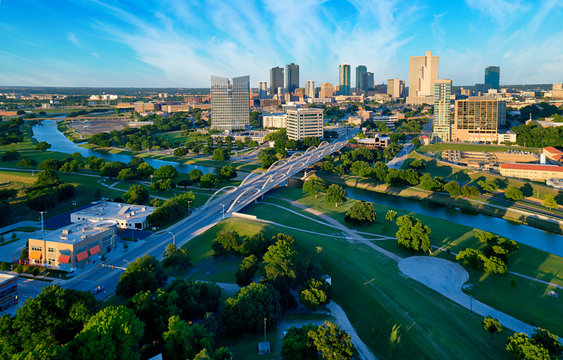
Fort Worth added roughly 71,000 new residents between 2020 and 2024, making it the fastest-growing large city in the country over that stretch. That level of demand reshaped the housing market in real ways: inventory tightened, prices climbed, and competition intensified. But by late 2024 and into 2025, the market began to rebalance, giving buyers more options and sellers a more realistic pricing environment than the frenzy of 2021-2022.
Fort Worth's Growth by the Numbers
The scale of Fort Worth's expansion is hard to overstate. According to a January 2025 report citing Texas Demographic Center projections, the city was home to nearly 990,000 residents as of January 2024, after welcoming about 71,000 new residents in the four years since the 2020 census. That's not a slow creep; that's a city reshaping itself in real time.
The City of Fort Worth's official population page confirms that among the 30 most populous U.S. cities, Fort Worth has been the fastest-growing since 2020, with 11.9% growth over the last five years. As of August 2026, that remains the most current official city summary available.
And the growth isn't slowing down. The City of Fort Worth's comprehensive planning document projects that the city will grow by more than 270,000 additional people over the next 24 years from its 2023 baseline of 935,508. City planners are already designing infrastructure, transportation corridors, and housing capacity around that expectation. The Texas Demographic Center's Vintage 2024 Population Projections, the most current official state forecast as of August 2026, reinforce that Tarrant County and the Fort Worth metro will see substantial continued growth through 2030 and beyond.
For context, a national data aggregator, World Population Review, estimated Fort Worth's population at approximately 1,008,605 in 2024, with 13.61% cumulative growth since the 2020 census. That figure is a modeled estimate rather than an official government count, but it aligns directionally with city and state data. The authoritative sources remain the City of Fort Worth and the Texas Demographic Center.
Where the Growth Is Pushing Development
Rapid population growth doesn't land evenly across a city. Based on the city's own comprehensive planning documents and state demographic projections, development pressure is concentrated in north Fort Worth, far southwest toward Crowley, and along major corridors reaching toward Parker and Denton counties. I work across a lot of these edges every week, in areas like Burleson, Godley, Joshua, and Aledo, and the pace of new construction activity in these corridors reflects exactly what the planners are forecasting.
For buyers, this matters because it shapes where new inventory is actually coming from. For sellers in established neighborhoods closer to the core, it means competition from new builds is real and worth factoring into your pricing strategy.
What the 2024 Growth Meant for Buyers and Sellers
The housing story of 2024 in Fort Worth was really a story of transition. The ultra-competitive, multiple-offer environment that defined 2021-2022 began to ease as inventory climbed back toward more normal levels. That shift continued into early 2025, showing that the trends taking shape in 2024 had real staying power.
What that transition looked like in practice: buyers gained back negotiating room they hadn't had in years. Closing date flexibility, repair requests, and concessions became possible again. Sellers who priced realistically still moved their homes, but the days of pricing above market and watching offers pile up were largely over by late 2024.
For the longer view on how this plays out across Johnson and Tarrant counties, I'd point you to this breakdown of what local buyers need to know in 2026, which picks up where the 2024 trends left off.
The Apartment and New Construction Pipeline
One of the clearest signals of how seriously developers took Fort Worth's growth trajectory was the surge in multifamily construction. New apartment communities, many with resort-style amenities, came online across submarkets including downtown, the West 7th corridor, near Alliance in north Fort Worth, the Medical District, and along the I-35 corridor. This expanded rental supply gives newcomers more options when they first arrive, which is relevant for the housing market overall because it absorbs some demand that might otherwise compete directly for for-sale inventory.
New single-family construction also remained active, particularly in the outer suburbs I mentioned above. If you're a buyer weighing a new build versus an existing home, that's a comparison worth making carefully. The guide to the best areas to buy in Johnson and Tarrant County on my site walks through how to think about that tradeoff based on how you actually want to live.
What Sellers Need to Know About the Texas Disclosure Process
In a growing market where buyers are moving from out of state or across the metro, transparency about a property's condition matters more than ever. In Texas, sellers of previously occupied single-family homes are generally required to deliver the TREC Seller's Disclosure Notice, a statewide form that covers material facts and the physical condition of the property. This requirement stems from Section 5.008 of the Texas Property Code, and the current form applies to contracts entered into on or after September 1, 2023. Statutory exceptions exist, including certain new construction, estate, and trustee sales, so confirm your situation with your agent or attorney.
In practice, I walk my sellers through this form early in the listing process, often before we go live on the market. It protects you, it sets buyer expectations, and it tends to make negotiations smoother because there are fewer surprises after the inspection.
How the Closing Process Works in North Texas
For buyers and sellers new to Texas, the closing process here runs through a title company, not an attorney's office (as is common in some other states). The title company handles escrow, the title search, the title commitment, lender coordination, document preparation, and disbursement of funds at closing. Earnest money is deposited with the title company after contract execution, and the title commitment is issued after the title search clears any liens, judgments, or other issues in the chain of title.
In a typical North Texas transaction, after the option period and inspection phase, the timeline from contract to close runs roughly 30 days, though this varies based on financing type and title complexity. Which title company is named in the contract, and how certain fees are allocated between buyer and seller, is negotiable rather than fixed by law. Your agent and your contract terms govern that, not a statewide formula.
| Growth Metric | Figure | Source / Period |
|---|---|---|
| New residents added, 2020-2024 | ~71,000 | Texas Demographic Center via Fort Worth Star-Telegram, Jan 2025 |
| Population as of Jan 2024 | ~990,000 | Texas Demographic Center via Fort Worth Star-Telegram, Jan 2025 |
| 5-year population growth rate | 11.9% | City of Fort Worth official population page |
| Most recent annual growth rate | 2% | City of Fort Worth official population page |
| Projected additional residents (next 24 years from 2023 baseline) | 270,000+ | City of Fort Worth Comprehensive Planning, 2023 |
All figures above are sourced from official city and state documents or cited reports; see inline links throughout this post for direct sources.
Every buyer's and seller's situation is different, and the only way to know how these market dynamics apply to your specific property or search is to run the numbers with someone who knows this market. That's exactly the kind of conversation I have with clients before we do anything else.
If you're ready to see what's available or get a read on what your home is worth in today's market, start here with a free home valuation or property search.
You can also read what past clients have said about working with my team on Google, Zillow, and Realtor.com.
Frequently Asked Questions
Is Fort Worth still one of the fastest-growing big cities, and how has that affected home prices?
Yes. According to the City of Fort Worth, it has been the fastest-growing city among the 30 most populous in the U.S. since 2020, with 11.9% growth over five years. That sustained demand kept prices elevated compared to pre-pandemic levels, but by 2024 the pace of appreciation moderated as inventory rose, shifting the market from a frenzy to a more balanced environment.
How many people moved to Fort Worth between 2020 and 2024, and what does that mean for housing demand?
According to a January 2025 report citing Texas Demographic Center data, Fort Worth added about 71,000 new residents between 2020 and 2024. That level of in-migration created sustained demand for both for-sale and rental housing, drove new construction at the city's edges, and kept competition for well-priced existing homes meaningful even as the market cooled from its 2021-2022 peak.
Is Fort Worth a buyer's market or a seller's market right now?
As of August 2026, Fort Worth has moved toward a more balanced market compared to the extreme seller's market of 2021-2022. Inventory has risen from historic lows, giving buyers more choices and negotiating room than they had a few years ago. That said, well-priced homes in strong locations still move. The specific dynamics in your price range and neighborhood matter a lot, and that's worth discussing with a local agent who tracks the data week to week.
Are more new construction homes and apartments coming to Fort Worth?
Yes. Developers responded to Fort Worth's rapid population growth with significant multifamily construction across several submarkets, including downtown, the Alliance area, the Medical District, and the I-35 corridor. New single-family construction also remained active in the outer suburbs, including areas in southwest Tarrant County and neighboring Johnson County. The Texas Demographic Center's Vintage 2024 projections suggest this pipeline will need to continue to keep pace with long-term growth forecasts.
What is the Texas Seller's Disclosure Notice, and what do Fort Worth homeowners have to share with buyers?
The Texas Real Estate Commission (TREC) Seller's Disclosure Notice is a statewide form that sellers of previously occupied single-family homes are generally required to deliver to buyers, covering material facts and the physical condition of the property. It's required for contracts entered into on or after September 1, 2023, under Section 5.008 of the Texas Property Code. Statutory exceptions apply, so confirm your situation with your agent or a real estate attorney.
How does Fort Worth's growth compare with Dallas, Austin, and other Texas cities?
Fort Worth outpaced other major Texas cities in raw population growth between 2020 and 2024, adding about 71,000 residents over that period according to Texas Demographic Center data. While Austin and Dallas also grew significantly, Fort Worth's combination of relative affordability (compared to Austin in particular), available land for development, and proximity to the broader DFW employment base made it a consistent top destination for both in-state and out-of-state movers.
The Bottom Line
Fort Worth's growth story is real, it's documented, and it has direct consequences for anyone buying or selling here. The market that emerged from 2024 is more balanced than the pandemic-era frenzy, but demand is still underpinned by one of the strongest population growth rates of any major U.S. city. Navigating that market well means working with someone who understands both the data and the neighborhoods. That's what my team at Texan Heritage Realty Group does every day across Fort Worth, Burleson, Cleburne, Aledo, and the surrounding communities.
Get your free home valuation or start your home search here.
Equal Housing Opportunity. Jason Cech, Broker Associate, Fathom Realty. Licensed by the Texas Real Estate Commission (TREC). Information About Brokerage Services | Consumer Protection Notice. This article is general information only and does not constitute legal, tax, or financial advice. Confirm your specific numbers and situation with your attorney, tax advisor, lender, or closing officer.