
Should I Replace My Roof Before Selling My House in Cleburne, Texas?
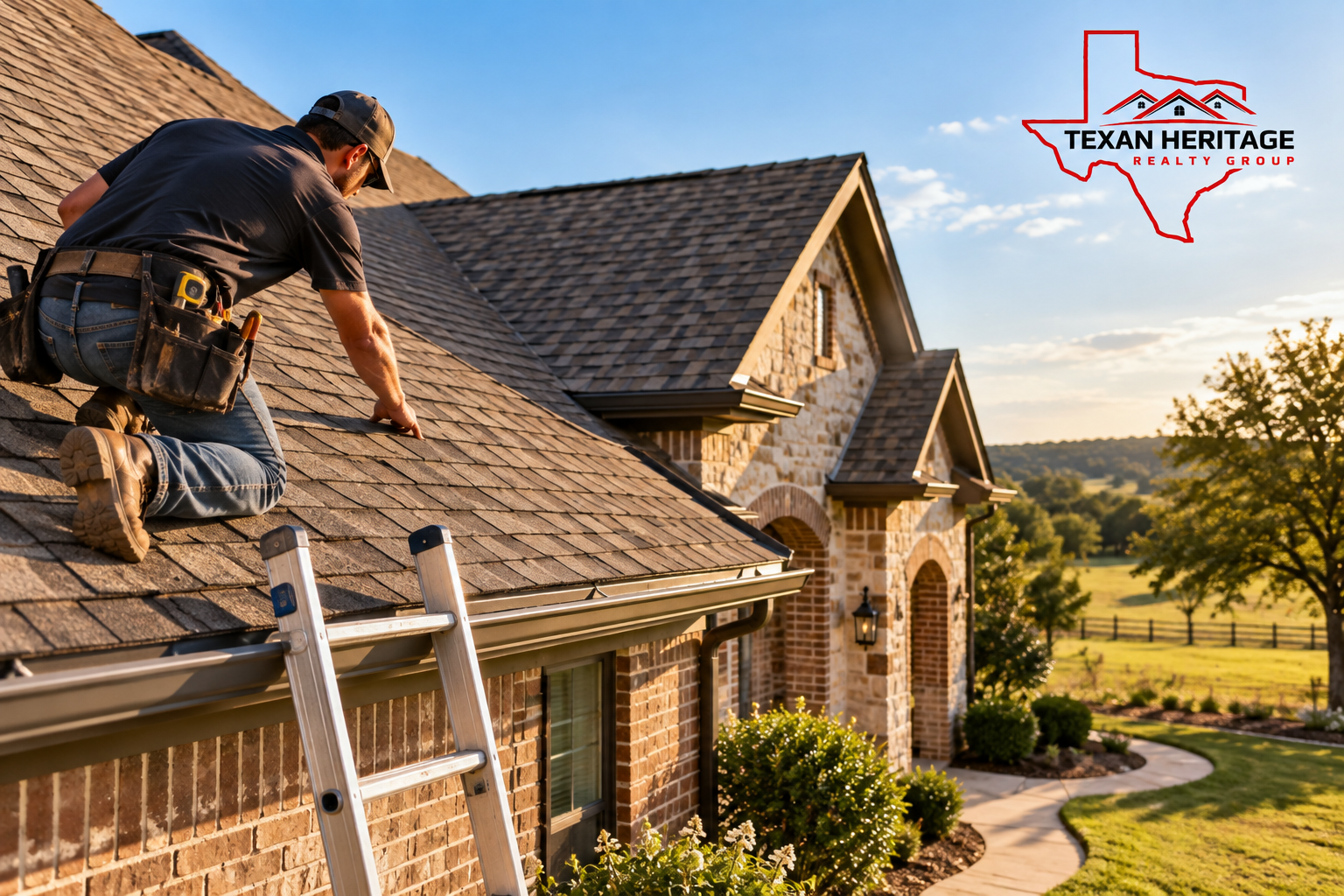
By Jason Cech, Broker Associate | Texan Heritage Realty Group, Fathom Realty
Updated September 2026
Quick Answer: Not necessarily. Cleburne homeowners should not automatically replace an older roof simply because they're preparing to sell. The better strategy is to determine the roof's actual condition, age, insurance implications, documentation, and likely effect on buyers before spending thousands of dollars. A damaged or difficult-to-insure roof can create significant problems during a sale, while an older but serviceable roof may call for a different strategy.
If you're preparing to sell your house and somebody tells you:
You need a new roof before you list it.
My first question is:
Why?
Maybe you do.
But before you write a very large check, let's figure out what problem we're actually trying to solve.
Does an old roof automatically need to be replaced before selling?
No.
Age and condition are related, but they aren't identical.
An older roof deserves closer attention because its age can affect buyer perception and insurance options. But that doesn't mean every older roof automatically needs replacement before the house can be sold.
The Texas Department of Insurance specifically warns homeowners that insurers may reduce roof coverage based on the roof's age and condition, and a roof in poor condition may not be covered at all by some insurers.
That's important because your future buyer will probably need homeowners insurance.
So we're not just asking:
Does the roof leak?
We may also need to ask:
Can the buyer reasonably insure it?
What roof problems should I take seriously before listing?
Before making a decision, look for evidence of actual problems.
Potential concerns can include:
- Active leaks.
- Missing or damaged shingles.
- Visible storm damage.
- Deteriorated materials.
- Previous repairs with unresolved issues.
- Interior water staining.
- Problems identified by a qualified roof professional.
- Conditions creating insurance concerns.
An older roof that is performing properly presents a different situation from a roof with active leakage and significant storm damage.
We shouldn't treat them as the same problem.
Why does roof age matter to Texas homebuyers?
Insurance.
This has become an increasingly important part of Texas real estate conversations.
According to the Texas Department of Insurance, some policies provide replacement-cost roof coverage while others pay actual cash value, which accounts for depreciation. TDI also notes that companies may change roof coverage as a roof ages.
In March 2026, TDI specifically advised homeowners to verify that their insurance company has the correct roof age and material information and noted that many policies reduce coverage based on roof age and materials.
For a seller, that means roof documentation can matter.
If you replaced your roof recently, locate the invoice and other legitimate records.
Don't make the buyer guess whether the roof is five years old or fifteen.
Should I file an insurance claim before selling?
This is a question for your insurance professional based on the actual circumstances—not something a real estate agent should answer with a blanket yes.
Homeowners insurance isn't a roof-replacement savings account.
TDI states plainly that an insurance company won't pay for a new roof simply because it is old or worn out. A covered event, policy terms, deductible, coverage type, and actual damage all matter.
If you believe the roof has legitimate storm damage, talk with your insurance professional about your coverage and options.
Don't assume.
What if a buyer's inspector finds roof problems after we're under contract?
Then we're potentially having the same conversation later—except now we're having it with a contractual deadline running.
Depending on the findings and contract, a buyer might:
- Ask the seller to make repairs.
- Request roof replacement.
- Seek a negotiated financial concession or price adjustment.
- Obtain further evaluation.
- Decide the condition is acceptable.
- Exercise contractual rights available to the buyer.
The seller isn't automatically required to agree to every buyer request.
But significant roof issues can create additional complications if the buyer's lender or insurance company also becomes concerned.
That's why sometimes dealing with a known problem before listing creates a cleaner transaction.
The key word is sometimes.
Is replacing the roof before listing ever a smart move?
Absolutely.
A pre-listing replacement can make sense when there's a documented material problem and replacement is the most sensible solution.
Potential advantages may include:
Better marketability. A documented new roof can remove a significant buyer objection.
Insurance appeal. A newer roof may be easier for buyers to insure, although policy terms vary by carrier.
Cleaner negotiations. You've potentially removed one large-ticket item from the inspection discussion.
Better documentation. The seller can provide legitimate information about installation date, materials, contractor, warranties, and permits when applicable.
TDI also notes that some insurers may offer discounts for certain new or more damage-resistant roofing materials, though discounts and eligibility vary.
When might I NOT replace the roof before selling?
This is equally important.
I wouldn't recommend replacing a roof merely because:
It's not brand new.
Or because:
A neighbor replaced theirs.
Or my personal favorite:
Somebody told me buyers like new roofs.
Buyers also like new kitchens, new HVAC systems, new windows, new flooring, and probably a new truck in the driveway.
That doesn't mean we're buying all of those for them.
If the roof is functional and insurable and doesn't present a material problem, spending a substantial amount of money before listing may not produce an equivalent return.
That's a pricing and positioning decision.
What documents should I gather if my roof was previously replaced or repaired?
Before listing, try to locate:
- Installation invoice.
- Contractor information.
- Approximate installation date.
- Material/product information.
- Warranty documents.
- Transfer instructions for transferable warranties.
- Insurance claim documentation when applicable.
- Permits or inspections when applicable.
- Records of subsequent repairs.
This becomes particularly important because the current TREC Seller's Disclosure Notice asks sellers about known roof defects or malfunctions and also separately asks about previous structural or roof repair.
The disclosure is about what the seller knows—not what the seller hopes nobody asks about.
What should I do before putting my Cleburne home on the market?
This is where I want to get involved before you start spending money.
At Texan Heritage Realty Group, we'd rather walk through the property, discuss the roof's known history, look at the competitive market, and identify potential obstacles before deciding on the strategy.
There are generally several possibilities:
| Roof Situation | Possible Strategy |
|---|---|
| Newer roof with documentation | Market the improvement appropriately |
| Older but serviceable | Gather records and evaluate before spending |
| Known repairable issue | Consider repair versus pricing/negotiation strategy |
| Significant deterioration/damage | Evaluate replacement before listing |
| Possible storm damage | Consult appropriate roofing and insurance professionals |
| Unknown condition | Consider professional evaluation |
The answer should be based on your house, not a generic seller checklist.
Should I replace my roof just to get more money for my house?
Not without running the numbers.
Replacing a roof may improve marketability and reduce transaction risk, but that doesn't automatically mean a buyer will increase the purchase price dollar-for-dollar by whatever you spent.
Sometimes the financial benefit is less about increasing the asking price and more about preventing a significant obstacle from killing or renegotiating the transaction.
Those are two different things.
Thinking about selling a house in Cleburne?
Before you replace the roof, remodel the kitchen, install new flooring, or start spending money because somebody told you that's what sellers are supposed to do, contact Texan Heritage Realty Group.
We'll walk through the house and help you identify which improvements may actually matter to your sale.
Sometimes the best advice we can give you is:
Fix it.
And sometimes it's:
Please put the checkbook away.
Frequently Asked Questions
Can I sell a Cleburne house with an old roof?
Potentially, yes. Roof age alone doesn't answer the question. Condition, buyer expectations, pricing, insurance availability, financing, and the overall transaction all matter.
Will homeowners insurance cover a new roof because mine is old?
Generally, don't assume so. TDI states that insurance doesn't pay for a new roof merely because the existing roof is old or worn out. Covered damage and policy terms matter.
What's the difference between replacement cost and actual cash value roof coverage?
Replacement-cost coverage generally pays based on current repair/replacement cost subject to the policy and deductible. Actual-cash-value coverage accounts for depreciation, so an older roof may result in a smaller claim payment.
Do I have to disclose previous roof repairs?
The current TREC Seller's Disclosure Notice asks about known roof defects/malfunctions and separately asks whether the seller is aware of previous structural or roof repair. Whether the statutory disclosure is required depends on the transaction and applicable exceptions.
Should I get a roof inspection before listing?
It can be helpful in certain circumstances, especially if there are known concerns or uncertainty about condition. It isn't automatically necessary for every seller. Discuss the property-specific strategy before ordering inspections or repairs.
The Bottom Line
Don't replace a roof simply because you're selling.
And don't ignore a legitimate roof problem simply because you're hoping the buyer won't notice it.
Find out what you have.
Understand the insurance implications.
Gather your documentation.
Then decide whether repairing, replacing, pricing appropriately, or addressing the issue through negotiation makes the most sense.
If you're considering selling in Cleburne or Johnson County, reach out to the Texan Heritage Realty Group team before you start writing checks.
About Jason Cech
Jason Cech is a Broker Associate with Fathom Realty and team leader of Texan Heritage Realty Group. Licensed since 2017, Jason has personally closed more than 550 transactions and helps homeowners throughout Cleburne, Johnson County, and surrounding North Texas communities prepare, position, and negotiate the sale of their homes.
Disclaimer: Texan Heritage Realty Group is powered by Fathom Realty. This article provides general educational information and isn't legal, roofing, engineering, insurance, lending, or tax advice. Insurance policies and property conditions vary. Consult the appropriate licensed professionals for advice regarding your specific circumstances. TREC notices should be provided as required. Equal Housing Opportunity.