
Why Isn’t My Cleburne House Getting Showings—and What Should I Change First?
By Jason Cech, Broker Associate | Texan Heritage Realty Group, Fathom Realty
Updated October 2026
Quick Answer: If your Cleburne home is getting few or no showings, start with the factors buyers see before they ever walk through the door: price, online presentation, photography, competition, property condition, and showing accessibility. If you're getting online views but few showings, the listing may not be compelling buyers to take the next step. If you're getting showings but no offers, buyer feedback, condition, price, and competing homes become even more important. Don't automatically renovate or repeatedly reduce the price without first diagnosing where buyers are dropping out.
This is one of the most frustrating conversations a seller can have with me:
Jason, why is nobody coming to see the house?
And my answer shouldn't be:
We just need the right buyer.
Maybe.
But that's not a strategy.
We need to figure out what the market is telling us.
Is the Cleburne Market Taking Longer Right Now?
Current local data gives sellers important context.
Realtor.com reports that in September 2026, Cleburne had 823 active listings and a 73-day median time on market. Its median listing price was $289,000. Realtor
Redfin's recent Cleburne data also shows homes taking roughly two months to sell, with its three-month measure around 64 days. Redfin
These sources use different methodologies and periods, so I wouldn't mash the numbers together.
But they tell us something useful:
Cleburne sellers are competing for buyer attention.
That does not mean your home should sit for 73 days.
It means simply putting a sign in the yard and waiting isn't enough.
What Does “No Showings” Usually Tell Us?
I diagnose this differently depending on where buyer interest stops.
| What We're Seeing | What It May Suggest |
|---|---|
| Very little online activity | Exposure, price, property type, or presentation issue |
| Online views but few showings | Buyers see it but aren't motivated enough to visit |
| Showings but poor feedback | Condition, layout, location, or expectations |
| Showings but no offers | Price/value equation may not be compelling |
| Offers far below list | Market may perceive a significant price/condition gap |
| Strong first-week activity then silence | Initial buyer pool saw it and passed |
This isn't an absolute formula.
But it gives us somewhere much more useful to start than:
Maybe next weekend will be better.
Is My Price the Problem?
Maybe.
Price is one of the first things buyers use to eliminate properties.
And price isn't evaluated in isolation.
A buyer sees your home next to:
House A: Updated kitchen.
House B: Newer roof.
House C: Larger lot.
House D: Seller offering concessions.
Your house: Same price.
The buyer isn't asking whether you love your house.
They're asking:
Which one gives me the most value for my money?
That's why pricing should be evaluated against today's active competition, not only homes that sold six months ago.
Sold comparables tell us what happened.
Active listings tell us what the buyer can choose right now.
We need both.
Should I Immediately Reduce the Price?
Not necessarily.
First diagnose the problem.
If the photos are poor, fix the photos.
If showing availability is extremely restrictive, fix access.
If the description buries the property's strongest feature, improve the marketing.
If buyers repeatedly mention one correctable condition issue, evaluate it.
But if the home is professionally marketed, easily accessible, receiving plenty of online exposure, and buyers consistently choose competing properties instead...
Then we have to have a serious conversation about price and value.
Marketing cannot permanently overcome a price the market rejects.
How Important Are the First Photos Buyers See?
Extremely.
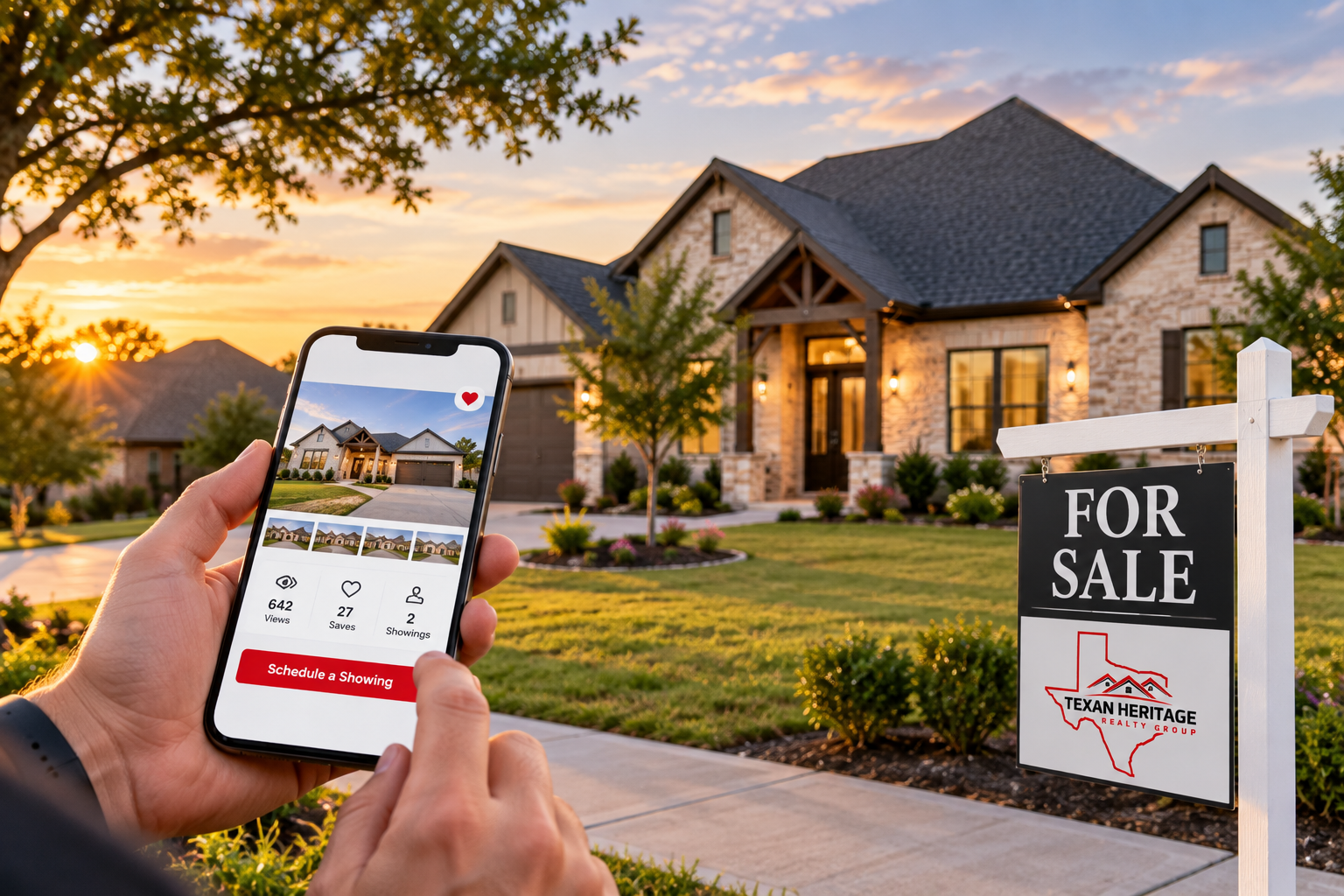
Your first showing is usually happening on a phone.
Before buyers smell the house...
Before they see the backyard...
Before they notice the natural light...
They see a thumbnail.
If that first photograph doesn't earn a click, nothing inside the house gets a chance to help us.
Professional photography should not simply document rooms.
It should answer:
Why should I choose this house over the ten others I just scrolled past?
The first several photographs should tell that story quickly.
Could My Listing Description Be Hurting Me?
It can certainly fail to help.
A description that begins with generic phrases such as:
Welcome to this beautiful home...
hasn't told the buyer anything.
If the property's strongest features are a huge workshop, oversized lot, assumable loan opportunity where applicable, recently replaced roof, exceptional outdoor space, multigenerational layout, or convenient location, don't hide that information in paragraph four.
Lead with what differentiates the property.
Could Showing Restrictions Be Costing Me Buyers?
Yes.
Sellers understandably want notice.
But every additional obstacle reduces flexibility.
If a buyer is seeing five Cleburne homes Saturday afternoon and four are easy to schedule while yours requires an unusual notice period or narrow window, we may never get the opportunity.
That doesn't mean sellers should surrender all control of their schedules.
It means we need to balance convenience with the goal:
Getting the house sold.
Should I Make Repairs If I'm Not Getting Showings?
Not automatically.
This is where sellers sometimes attack the wrong problem.
If buyers aren't even walking through the door, replacing the bathroom vanity may accomplish nothing.
First determine whether buyers are rejecting the listing before seeing the condition in person.
If we are getting showings and consistently hearing:
The carpet is killing it.
The odor is a problem.
The backyard needs work.
Buyers are worried about the roof.
Now we have evidence to evaluate.
Don't renovate based on panic.
Make changes based on information.
What About Seller Concessions or a Rate Buydown?
This deserves serious consideration in a higher-rate environment.
A seller may be able to negotiate allowable concessions that help a qualified buyer with closing costs or, depending on the buyer's loan and lender, an eligible rate-buydown structure.
But we should not advertise or negotiate concessions as though every buyer can use the same amount in the same way.
Loan-program, lender, appraisal, contract, and closing-cost limitations matter.
This is a conversation involving the buyer's lender—not simply a marketing slogan.
The strategic question is:
Would buyers respond better to another price reduction, or could an appropriately structured incentive create more value for the buyer?
Sometimes the answer is price.
Sometimes it isn't.
How Long Should I Wait Before Changing Something?
There isn't a universal Day 7, Day 14, or Day 30 rule.
Instead, monitor the data.
After going live, I want to know:
- How many buyers are seeing the listing online?
- How does that compare with competing homes?
- Are buyers saving/favoriting it?
- Are agents scheduling showings?
- What are showing agents telling us?
- What objections keep repeating?
- What new competition has entered the market?
- Have competing sellers reduced prices?
- Have comparable properties gone under contract?
- Has anything changed in financing conditions?
A listing is giving us information every day.
Our job is to listen.
What Should I Change First?
My order would generally be:
First: Verify exposure and presentation.
Make sure the listing is accurately represented and the strongest features are obvious.
Second: Evaluate showing accessibility.
Can motivated buyers actually see it?
Third: Study the competition again.
Not the competition from listing day.
Today's competition.
Fourth: Analyze feedback and behavior.
What are buyers repeatedly telling us?
Fifth: Decide whether condition, incentives, or price need adjustment.
Now we're making a decision based on evidence rather than emotion.
What Does Today's Cleburne Market Tell Sellers?
The September 2026 Realtor.com data shows a market with hundreds of active choices and a median time on market measured in months rather than days. Realtor
That means sellers should expect buyers to compare.
And when buyers have choices, positioning matters.
The objective isn't necessarily to be the cheapest house.
It's to be one of the homes that makes the buyer say:
For the money, this one makes sense.
That's a much better target.
Is Your Cleburne Listing Sitting?
Before making another random price reduction or spending thousands on repairs, let's diagnose the listing.
Texan Heritage Realty Group can evaluate the current competition, price position, photography, presentation, showing activity, feedback, and potential buyer incentives and determine what we'd change first.
Frequently Asked Questions
Does no showings automatically mean my Cleburne home is overpriced?
No. Price is a major factor, but poor presentation, limited showing availability, unusual property characteristics, weak photography, seasonality, or other factors can contribute. Diagnose before prescribing.
How long are Cleburne homes taking to sell?
Realtor.com's September 2026 citywide data reports a 73-day median time on market. Individual properties can sell much faster or much slower depending on price, condition, location, property type, and competition. Realtor
Should I reduce my price after two weeks?
Not based solely on an arbitrary calendar rule. Evaluate activity, competition, feedback, online engagement, and whether your current price remains defensible.
Should I offer buyer closing costs?
Potentially. Seller concessions can be valuable, but their use and amount depend on the buyer's financing, allowable closing costs, contract, lender, appraisal, and loan-program requirements.
Will an open house solve the problem?
An open house can increase exposure and provide useful feedback, but it cannot by itself fix an underlying price/value or property-condition problem.
Should I take the house off the market and relist it?
That is not a substitute for correcting the reason buyers rejected the property. Discuss the MLS rules, history, strategy, and actual problem with your listing agent before making that decision.
About Jason Cech
Jason Cech is a Broker Associate with Fathom Realty and team leader of Texan Heritage Realty Group. He has approximately a decade of real estate experience and more than 550 personal closings, serving Cleburne, Johnson County, and surrounding North Texas communities.
Not getting the activity you expected? Reach out to the Texan Heritage Realty Group Team. We'll look at what buyers can choose today and tell you what we would change—and just as importantly, what we wouldn't spend money changing.
Texan Heritage Realty Group is affiliated with Fathom Realty. Market statistics change and vary by property type, location, price range, and source methodology. This article provides general real estate information and is not lending, appraisal, legal, tax, insurance, or financial advice. TREC regulates Texas real estate license holders. Equal Housing Opportunity.