Why do you need mortgage pre-approval before touring homes in North Texas?

In North Texas, getting pre-approved before you tour homes is the single most important thing you can do to protect your time, your money, and your chances of landing the right house. Fort Worth's market is more balanced in 2026 than it was a few years ago, but homes in attractive price ranges still receive multiple offers, and listing agents routinely set aside offers that don't include a current lender pre-approval letter.

I always tell my clients this before we ever schedule a single showing: the pre-approval isn't paperwork for paperwork's sake. It's the foundation of your entire offer strategy.

What the 2026 Fort Worth Market Actually Looks Like

If you've been watching headlines, you know North Texas has cooled from its pandemic-era intensity. That's true. But "cooled" doesn't mean "easy."

According to the Greater Fort Worth Association of REALTORS® (GFWAR) June 2026 Housing Report, the year-to-date median home price in Fort Worth through the first half of 2026 was $333,068, with the June 2026 median sitting at $335,975, down just 0.3% from June 2025. Tarrant County's year-to-date median was $350,528, and Denton County ran higher at around $434,748. Prices vary meaningfully depending on where you're shopping.

A Fort Worth Report story from July 2026 summarizing the same GFWAR data noted that Q2 2026 saw 1,067 homes sold in June alone, up 5.2% year over year, even as prices softened slightly. That's not a slow market. That's a market with more options for buyers, and still enough demand that being unprepared costs you.

Mid-2026 estimates from Zillow (updated through June 30, 2026) put Fort Worth's median days to pending at around 28 days, with about 21% of homes still closing above list price. Redfin's August 2026 snapshot characterizes Fort Worth as "somewhat competitive," with homes averaging about 2 offers and selling in roughly 46 days. Those two sources use different datasets, so treat them as context rather than definitive figures, but the direction is clear: typical Fort Worth homes go under contract in about one to two months, and multiple offers remain common in well-priced ranges.

The bottom line: you have more negotiating room than buyers had in 2021 or 2022, but you still need to be ready to move when the right home appears.

Area YTD Median Price (Jan–Jun 2026) Source
Fort Worth $333,068 GFWAR June 2026 Report
Tarrant County $350,528 GFWAR June 2026 Report
Denton County $434,748 GFWAR June 2026 Report

Those price differences matter more than most buyers realize. If you're pre-approved based on a rough estimate of what you "think" you can afford, you may be touring homes in Denton County when your budget actually fits Fort Worth or Burleson. Pre-approval gives you a real number, not a guess. If you're still working through what those numbers mean for your situation, my post on how much house you can really afford in North Texas is a good place to start.

Pre-Qualification vs. Pre-Approval: The Difference That Wins (or Loses) Deals

These two terms get used interchangeably, but they are not the same thing, and sellers in North Texas know the difference.

Pre-qualification is informal. A lender takes your self-reported income, debts, and assets and gives you a ballpark number. No verification, no credit pull (or only a soft pull). It takes fifteen minutes and means almost nothing to a listing agent reviewing competing offers.

Pre-approval is a conditional commitment. The lender has pulled your credit, verified your income documents (W-2s, tax returns, pay stubs), reviewed your assets, and run your file through underwriting guidelines. You get a letter with a specific loan amount. That letter tells the seller's agent: this buyer has been vetted.

According to NAR's 2024 Profile of Home Buyers and Sellers, 4% of successful homebuyers had at least one mortgage application rejected before ultimately closing, with debt-to-income ratio problems cited in 40% of those cases and low credit scores in 23%. Pre-approval is how you find those problems before you're under contract and have already paid for inspections.

In a market where homes can go under contract in under a month, discovering a financing issue after you've written an offer is an expensive problem. You could lose your option fee, and depending on contract timing, potentially your earnest money too. Pre-approval shifts that risk to the beginning of the process, when the stakes are zero.

How Pre-Approval Fits the Texas Homebuying Process

Texas has a specific transaction sequence that makes pre-approval even more important than in some other states, and it's worth understanding before you start touring.

The TREC Contract and Buyer Approval Deadline

When you write an offer in Texas using the standard TREC One to Four Family Residential Contract, buyers using financing typically attach the Third Party Financing Addendum. That addendum sets a "Buyer Approval" deadline, a specific date by which you must obtain full loan approval. If you're starting the pre-approval process after you go under contract, you're already behind. Buyers who come in pre-approved have a much easier time meeting that deadline and are far less likely to need extensions that can frustrate sellers or put the contract at risk.

The Seller's Disclosure and Why Speed Matters

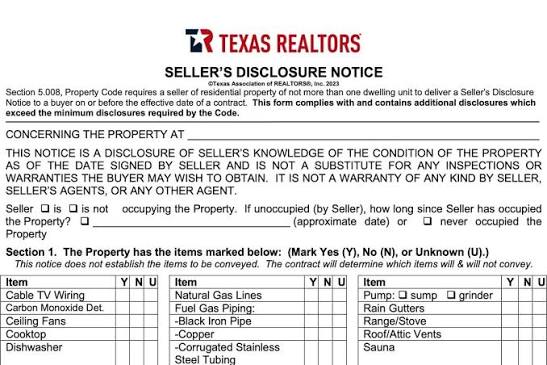
Under Texas Property Code § 5.008, sellers of most previously occupied single-family homes must provide a written Seller's Disclosure Notice detailing known material facts and property condition. As of July 1, 2026, TREC has mandatory updated forms in effect, including a revised Seller's Disclosure Notice and a new Water Notice (TREC No. 61-0). Always confirm the latest required forms directly with TREC or your agent.

That disclosure often reveals things worth knowing: foundation history, prior flooding, roof age, mechanical systems. A pre-approved buyer can review that disclosure and quickly ask their lender whether any issues would affect underwriting. A buyer who hasn't started the loan process yet has to pause, figure out financing, and then circle back. In a market where a well-priced home in Cleburne, Burleson, or Joshua can attract multiple buyers, that delay can cost you the house.

The Title Company's Role in Your Closing Timeline

Texas is a title company closing state. Your title company acts as escrow agent, holds your earnest money, orders the title commitment, coordinates with your lender to prepare the Closing Disclosure and loan documents, conducts the signing, and records the deed with the county clerk (Tarrant County Clerk, in most Fort Worth transactions).

Here's the key: the title company cannot finalize the closing until the lender delivers clear-to-close instructions. Pre-approval shortens that path because a significant portion of the underwriting work is done before you ever write an offer. Buyers who walk in fully pre-approved tend to have smoother, faster closings. That matters to sellers, and it matters to you.

For a broader look at what the local buying process involves in Tarrant and Johnson Counties, my guide on buying a home in Johnson and Tarrant County in 2026 walks through the full sequence.

What Listing Agents in North Texas Actually Expect

Texas law doesn't require you to attach a pre-approval letter to an offer. But in practice, listing agents across Fort Worth, Weatherford, Aledo, and the surrounding communities expect one. In competitive price ranges, offers without a current lender letter are often set aside in favor of similarly priced offers from pre-approved buyers. I've seen it happen. It's not a technicality. It's a real competitive disadvantage.

Your specific situation, your price range, your target neighborhoods, and your timeline all shape how much this matters. That's exactly the kind of question I walk buyers through before we ever schedule a showing.


If you've found this helpful, I'd appreciate you taking a moment to share your experience. You can read what other buyers and sellers have said on Google, Zillow, or Realtor.com.

Frequently Asked Questions

Do I really need a mortgage pre-approval before I start touring homes in Fort Worth?

Yes, and not just as a formality. In Fort Worth's 2026 market, homes in attractive price ranges still receive multiple offers and go under contract in weeks. Listing agents routinely expect a current pre-approval letter with any serious offer, and touring without one means you're not actually ready to buy, even if you find the right home tomorrow.

What's the difference between pre-qualification and pre-approval when buying a house in Texas?

Pre-qualification is an informal estimate based on self-reported information and carries little weight with sellers. Pre-approval involves verified income documents, a credit pull, and a conditional commitment from the lender for a specific loan amount. In North Texas, sellers and their agents treat full pre-approval as significantly stronger evidence that a buyer can actually close.

Will a seller in Fort Worth even look at my offer if I don't include a pre-approval letter?

They might glance at it, but in competitive price ranges they probably won't take it seriously. North Texas listing agents commonly require or strongly prefer a current lender pre-approval letter to consider an offer. An offer at the same price from a pre-approved buyer will almost always be chosen over one without documentation of financing.

How long does a pre-approval letter stay valid in North Texas before I need to update it?

Most lenders issue pre-approval letters that are valid for 60 to 90 days, though this varies by lender and loan type. If your search extends beyond that window, you'll need to refresh it, which typically means updated pay stubs and a credit review. Confirm the specific expiration with your lender, and don't let it lapse while you're actively touring.

If my pre-approval is denied, can I still buy a home in North Texas, and what should I fix first?

A denial is not the end of the road. According to NAR's 2024 Profile of Home Buyers and Sellers, the most common reasons for rejection are debt-to-income ratio issues (40%), low credit scores (23%), unverifiable income (12%), and insufficient reserves (12%). Each of those has a path forward. A good lender will tell you exactly what to address, and the earlier you find out, the more time you have to fix it before you're under contract on a home you love.

How fast do homes sell in Fort Worth right now, and how does pre-approval help me move quickly?

As of mid-2026, estimates from national portals suggest Fort Worth homes go pending in roughly 28 to 46 days depending on the data source, with some well-priced homes moving faster. Pre-approval means that when you find the right home, you can write a credible offer the same day, rather than scrambling to start the loan process after the fact.


Pre-approval isn't just a box to check. It's the step that makes every other step in the North Texas homebuying process faster, cleaner, and more competitive. If you're ready to get started, or just want to understand exactly what a lender will look at before you call one, reach out to me directly and I'll walk you through it.

About Jason Cech

Jason Cech is the Owner and Broker Associate of Texan Heritage Realty Group in Cleburne, Texas, with over 9 years of real estate experience helping families buy and sell across Johnson County, Fort Worth, and North Texas. A DFW Real Producers Top 500 Agent and multi-year top producer, he leads his team with a client-first approach built on integrity, tradition, and excellence.

Fathom Realty · 817-776-8319

Equal Housing Opportunity. Jason Cech, Broker Associate, Fathom Realty, licensed by the Texas Real Estate Commission (TREC). This article is general information only and is not legal, tax, or financial advice. Confirm your specific situation with your attorney, tax advisor, lender, or closing officer. Broker fees and commissions are fully negotiable and not set by law. TREC: Information About Brokerage Services | TREC: Consumer Protection Notice.

Aug. 31, 2026

Inspection Negotiations: The North Texas Way

Do sellers in North Texas have to fix everything on an inspection report?

No. In Texas, sellers are not legally required to repair most items that appear on a home inspection report. Nearly everything in a standard resale transaction is negotiable, with the exception of lender-required repairs and certain municipal code violations. The Texas option period is the primary window for buyers and sellers to work through inspection findings and reach an agreement before the deal moves forward.

Inspection negotiations are one of the moments in a real estate transaction where deals either deepen or fall apart. I've watched both happen, and the difference almost always comes down to one thing: knowing what's actually negotiable versus what isn't, and reading the market clearly enough to know how hard to push.

Here in Fort Worth and across Johnson County, the rules of the game are specific to Texas. Let me walk you through how this actually works.

How the Texas Option Period Shapes Every Inspection Negotiation

Texas contracts include an option period, a defined window after the contract is signed during which the buyer can terminate for any reason and receive their earnest money back. This is the negotiation window for inspection findings, and it's the most important structural feature of a Texas real estate deal that buyers and sellers from out of state often don't fully appreciate.

In practice across the DFW area, inspections are typically scheduled within the first two to five days of the option period. That leaves time to receive the report, get contractor estimates if needed, and still have room to negotiate before the option expires. The option period length itself is negotiated in the contract, not set by state law, so what you agree to upfront matters.

Once both sides agree on repairs or credits, those terms are documented as a contract amendment. The title company, acting as the neutral escrow and closing agent, implements whatever the parties have agreed to. Title doesn't decide what gets fixed. They process the deal as written.

Mandatory vs. Negotiable: The Distinction That Drives Strategy

Not every inspection item sits in the same category, and treating them all the same is a mistake I see buyers and sellers make regularly. Here's how I think about it:

  • Truly discretionary items, cosmetic issues, minor wear and tear, older but functional systems. These are negotiable. A seller can decline to repair them, offer a credit, or do nothing. The buyer can accept that or walk during the option period.
  • Lender-required repairs, FHA and VA loans in particular have property condition requirements. If an appraiser flags a safety issue or a structural concern, the lender may require it to be resolved before they'll fund the loan. These aren't optional if the buyer is using that financing.
  • Municipal code violations, Fort Worth and surrounding North Texas cities can require correction of code violations regardless of what the buyer and seller agree to privately. The parties can negotiate who pays and how the work gets done, but the violation itself may need to be addressed.

A skilled negotiator distinguishes between these categories immediately. Conflating a cracked outlet cover with a failed HVAC system, or treating a code violation the same as a cosmetic paint issue, leads to either an overreaching repair list or a missed opportunity to address something that actually matters.

Common North Texas Inspection Issues That Drive Negotiations

Certain items come up again and again in this region, and they tend to carry real negotiating weight:

  • Roof age and hail damage, North Texas is hail country. Buyers routinely ask for repair or credit when storm damage shows up on an inspection, and sellers who've lived through a few hailstorms know this is coming.
  • HVAC performance and ductwork, In a Texas climate, a marginal HVAC system isn't a minor issue. Deficiencies here frequently become the centerpiece of repair negotiations.
  • Plumbing and sewer lines, Root intrusion and aging lines are common in older North Texas neighborhoods. Buyers who add a sewer scope to their inspection often uncover issues that weren't visible during a standard walkthrough.
  • Foundation concerns, North Texas soil is notoriously expansive. Foundation movement is common, and it's one of the items where I almost always recommend getting a specialist's evaluation rather than relying on a general inspection report alone.

If a previous inspection in the last four years flagged any of these issues, there's another layer to consider: the Texas Sellers Disclosure Notice, which requires sellers to disclose known defects and prior inspection findings. That history can become a negotiating tool for a buyer who does their homework.

Reading the 2026 Fort Worth Market Before You Negotiate

How hard you can push on inspection repairs depends heavily on market conditions at the time of your transaction. And in mid-2026, Fort Worth's market has shifted in a direction that gives buyers more room than they had a few years ago.

According to a July 2026 report from the Fort Worth Report, the average days on market in Fort Worth in June 2026 was 48 days, unchanged from June 2025. The same report describes the Fort Worth market as better balanced due to increased inventory, a meaningful shift from the severely constrained conditions of earlier years.

A balanced market doesn't mean sellers are desperate. It means the old "take it or leave it" stance carries real risk now, because buyers have options. Sellers who dig in on every inspection item are more likely to watch a deal fall apart and relist, which costs time and money. That dynamic changes the tone of inspection negotiations.

Market Condition Typical Buyer Leverage on Repairs Common Seller Response
Severe seller's market (low inventory) Limited, sellers can decline most requests Decline repairs, sell as-is
Balanced market (mid-2026 Fort Worth) Moderate, buyers can negotiate on significant items Credits or targeted repairs on major issues
Buyer's market (high inventory) Strong, buyers can push broadly More willingness to repair or reduce price

Every micro-market is different, and a home in Burleson with three competing offers is a different conversation than a home in Cleburne that's been sitting for 60 days. That's the kind of context I bring to every negotiation I'm part of.

Credits vs. Repairs: Which One Actually Serves You Better

One of the decisions I walk my clients through during every inspection negotiation is whether to ask for repairs or a credit. They're not the same thing, and the right answer depends on the situation.

Repairs done before closing can be rushed, done by whoever the seller hires, and completed without the buyer verifying quality. A credit, on the other hand, gives the buyer control over who does the work and when. For anything involving a specialized contractor, foundation, roof, major plumbing, I generally lean toward negotiating a credit so the buyer can manage the process after closing.

Credits are also cleaner when the timeline is tight. A foundation repair that requires permits and a multi-week contractor schedule can blow up a closing date. A negotiated credit keeps the deal moving.

That said, lenders have rules about how credits can be structured and applied, so it's worth confirming the approach with your lender before you finalize the amendment. If you're still working on the financing side of your transaction, this breakdown of what you can actually afford in North Texas is a good starting point.

The "As-Is" Misconception

I hear this one often: "The seller listed it as-is, so they don't have to disclose anything." That's wrong, and it's a costly misconception.

In Texas, listing a home "as-is" does not exempt the seller from completing the Texas Sellers Disclosure Notice. The Texas Property Code requires sellers of most residential properties to disclose known material defects, regardless of how the listing is marketed. An "as-is" sale simply means the seller isn't agreeing upfront to make repairs, it doesn't change their disclosure obligations or a buyer's right to inspect and negotiate during the option period.

If you're preparing to list and want to understand what the disclosure process looks like from the seller's side, my post on getting your home sale-ready in North Texas covers the preparation steps that help sellers walk into this process with fewer surprises.

The bottom line: make decisions based on what the contract actually says and what Texas law actually requires, not on what someone told you at a dinner party. I've seen deals go sideways in both directions, buyers who demanded repairs the seller had zero legal obligation to make, and sellers who thought "as-is" was a shield against disclosure. Neither ends well.

If you're heading into an inspection negotiation and want a clear read on where you stand, that's exactly the conversation I have with clients before we ever put a repair list together. Reach out and let's look at your specific situation.

Read what clients say about working with our team on Google, Zillow, and Realtor.com.

Frequently Asked Questions

In Fort Worth, do sellers have to fix everything the inspector finds?

No. Texas law does not require sellers to repair most items on an inspection report for standard resale transactions. Nearly everything is negotiable. The exceptions are repairs required by the buyer's lender (common with FHA and VA financing) and municipal code violations that must be corrected regardless of the parties' agreement. Sellers can decline repair requests, offer a credit, or counter with a limited scope of work.

How does the option period work in Texas, and when should we negotiate inspection repairs?

The Texas option period is a contractually defined window after the contract is executed during which the buyer can terminate for any reason and receive their earnest money back. The length is negotiated in the contract, not set by state law. In DFW practice, inspections are typically scheduled in the first few days of the option period to leave time for estimates and negotiation before the deadline. Any agreed repairs or credits are documented as a contract amendment.

What's the North Texas market like in 2026, do buyers have leverage to ask for repairs?

Yes, buyers have more leverage in mid-2026 than they did during the peak seller's market years. According to a July 2026 Fort Worth Report, increased inventory has created a better-balanced market, with an average of 48 days on market in June 2026. That doesn't mean sellers will agree to everything, but the "take it or leave it" dynamic has softened, and significant inspection findings are worth negotiating.

What has to go on the Texas Sellers Disclosure if previous inspections found issues?

The Texas Sellers Disclosure Notice asks sellers to disclose known defects and, in practice, prior inspection reports from the last four years. If a previous inspection flagged foundation concerns, roof damage, or other material issues, sellers are generally expected to disclose that history. Buyers in North Texas can and do use prior inspection findings as leverage in current negotiations.

Are FHA and VA loans stricter about inspection repairs in North Texas?

Yes. FHA and VA loans have property condition requirements that go beyond a standard resale negotiation. If an appraiser identifies safety issues, structural deficiencies, or other conditions that don't meet HUD minimum property standards or VA minimum property requirements, the lender may require those items to be resolved before the loan funds. In those cases, the repairs are not optional, the deal doesn't close until they're addressed. Confirm the specifics with your lender early in the process.

Can a seller in Fort Worth refuse repair requests and still sell the home legally?

Yes. A seller in Texas can decline repair requests for items that aren't lender-required or code violations. The buyer then decides whether to proceed as-is, negotiate further, or terminate during the option period. What a seller cannot do is refuse to disclose known defects, an "as-is" listing does not eliminate the seller's disclosure obligations under the Texas Property Code.

The inspection negotiation is where a lot of North Texas deals either get stronger or start to unravel. Knowing what's required, what's negotiable, and what the market will actually support in 2026 is the difference between a smooth close and a deal that falls apart at the worst possible moment. Reach out to our team and let's talk through where you stand before the inspection report lands in your inbox.

About Jason Cech

Jason Cech is the Owner and Broker Associate of Texan Heritage Realty Group in Cleburne, Texas, with over 9 years of real estate experience helping families buy and sell across Johnson County, Fort Worth, and North Texas. A DFW Real Producers Top 500 Agent and multi-year top producer, he leads his team with a client-first approach built on integrity, tradition, and excellence.

Fathom Realty · 817-776-8319 > Visit Our Site!

This article is provided for general informational purposes only and does not constitute legal, tax, or financial advice. Readers should confirm their specific situation with a licensed attorney, tax advisor, lender, or escrow/closing officer. Equal Housing Opportunity. Jason Cech, Broker Associate, Fathom Realty. Licensed by the Texas Real Estate Commission (TREC). TREC: Information About Brokerage Services | TREC: Consumer Protection Notice.

Aug. 29, 2026

Meet the Team: Jason Cech, Team Leader & Broker Associate

Meet Jason Cech: Owner & Broker Associate of Texan Heritage Realty Group

For Jason Cech, real estate has never been about simply closing another transaction.

It's about the responsibility that comes with helping someone make what may be one of the largest financial decisions of their life.

As Owner and Broker Associate of Texan Heritage Realty Group, Jason leads a team serving buyers and sellers throughout Cleburne, Johnson County, Fort Worth, and surrounding North Texas communities.

His philosophy for the team can be summed up in one sentence:

“We don't just practice real estate the best we can. We practice real estate the best it can be done.”

It's an ambitious standard—and an intentional one.

Nearly a Decade Serving North Texas Real Estate Clients

Jason has spent nearly a decade helping families buy, sell, and invest in real estate throughout Johnson County and the surrounding North Texas communities.

Over those years, he's helped clients navigate everything from first homes and traditional residential sales to acreage, investment properties, new construction, and more complicated transactions.

But his business background started well before real estate.

Before becoming a real estate professional, Jason spent years in corporate leadership and business ownership, including 10 years as the owner of the Sears Hometown Store in Cleburne.

That experience helped shape the way he approaches real estate today.

Customer service matters.

Accountability matters.

Negotiation matters.

And when someone trusts you with an important financial decision, the details matter.

Building Texan Heritage Realty Group

In 2024, Jason purchased the real estate team that would become Texan Heritage Realty Group.

The name changed, but the goal went considerably deeper than a rebrand.

Jason wanted to build a real estate organization structured around delivering a consistently high level of service.

That meant moving beyond the traditional model where one real estate agent is expected to handle virtually every aspect of the business.

Instead, Texan Heritage Realty Group was built around specialists.

Lead Agents focus on advising clients, showing properties, pricing homes, negotiating contracts, and representing buyers and sellers.

Inside sales and business development help ensure inquiries receive prompt attention and potential clients don't fall through the cracks.

Marketing provides greater exposure for the team's listings and keeps clients and the community informed.

Transaction and client-concierge support helps coordinate the many details that arise between contract and closing.

The objective is simple: put the right people in the right roles so the client receives better service.

What Does Jason Do as Team Leader?

As Team Leader, Jason's job isn't simply to sell houses.

An important part of his role is making sure the people and systems behind Texan Heritage Realty Group are working together effectively.

That includes supporting the team's agents and staff, improving systems, helping solve difficult transaction issues, developing marketing strategies, monitoring the local market, and continually looking for ways to improve the client experience.

The philosophy is that if the team is properly supported, the team can do a better job supporting its clients.

Jason also remains actively involved in real estate transactions and client representation, particularly when his experience can help navigate negotiations, pricing decisions, unusual properties, or complicated situations.

Helping North Texas Home Sellers

For sellers, Jason believes the conversation should begin with much more than:

“What price do you want to list at?”

A homeowner needs to understand what the market is actually doing.

That means studying recent comparable sales, current competition, buyer demand, property condition, days on market, pricing trends, and the characteristics that make a particular property different.

Then comes the bigger question:

What is the seller actually trying to accomplish?

Maximum price?

A faster sale?

A particular closing date?

Selling before purchasing another property?

Reducing the amount of work required before listing?

Those objectives can require different strategies.

Jason believes a strong listing strategy should be built around both the property and the seller's goals, rather than using exactly the same plan for every house.

Helping Buyers Look Beyond the House

Buyers face a different challenge.

It's easy to fall in love with a kitchen, backyard, workshop, or floor plan.

But the house itself is only part of the decision.

Jason encourages buyers to consider the larger financial picture, including purchase price, financing, property taxes, insurance, HOA expenses, special districts or assessments, inspection findings, future maintenance, location, and potential resale.

This becomes especially important in rapidly growing areas of Johnson County and North Texas, where two similarly priced homes can have very different tax rates, assessments, amenities, and long-term ownership costs.

The goal isn't simply:

“Can you buy this house?”

It's:

“Does buying this house make sense for you?”

Negotiation Is More Than Price

One lesson that comes from years of business ownership and real estate is that good negotiation requires understanding the entire deal.

A real estate offer isn't just a price.

It can include seller concessions, financing terms, earnest money, option periods, contingencies, title considerations, closing dates, personal property, repairs, and other provisions.

A $500,000 offer isn't necessarily better than a $490,000 offer.

The details determine that.

Jason believes his responsibility is to help clients understand the trade-offs involved so they can make an informed decision rather than reacting to a single number.

Local Knowledge Matters

Real estate is intensely local.

National headlines can tell you what's happening with mortgage rates or broad housing trends.

They can't necessarily tell you what's happening with a three-acre property outside Godley, a subdivision in Cleburne, new construction in Alvarado, or a home competing against builder inventory in another Johnson County community.

That's why local transaction experience matters.

Texan Heritage Realty Group works throughout North Texas, but Johnson County is home.

Understanding the communities, housing stock, development, taxes, builders, acreage properties, and local market dynamics gives the team context that can't be gained simply by looking at an online valuation.

Recognized Among North Texas Real Estate Professionals

Jason has also been recognized by DFW Real Producers among the area's top-producing real estate professionals for multiple consecutive years.

Awards and production are meaningful, but Jason doesn't view them as the standard clients should ultimately use to judge the team.

The more important questions are:

Did we communicate?

Did we give good advice?

Did we protect the client's interests?

Did we solve problems when they occurred?

Would the client trust us again?

And would they confidently send their family or friends to us?

That's the reputation Texan Heritage Realty Group is working to earn one transaction at a time.

Integrity. Tradition. Excellence.

Three words sit at the center of the Texan Heritage Realty Group brand:

Integrity. Tradition. Excellence.

Integrity means doing what you say you're going to do and being willing to tell a client what they need to hear, even when it isn't necessarily what they hoped to hear.

Tradition represents the values that don't need reinventing: hard work, accountability, treating people properly, keeping your word, and understanding that reputation matters.

Excellence means refusing to become comfortable with “good enough.”

Technology will continue changing real estate.

How consumers search for homes will change.

Marketing will change.

Artificial intelligence will change how people find information and professionals.

But those core values shouldn't.

Serving the Community Beyond Real Estate

Jason's connection to Johnson County extends beyond his real estate business.

He has been a longtime member of the Cleburne Lions Club, including serving two terms as President and continuing to serve on its board.

He also participates in Meals on Wheels for Johnson County.

Community involvement matters because Texan Heritage Realty Group isn't simply doing business in Johnson County.

This is where the team lives, works, raises families, and builds relationships.

Life Outside Real Estate

When Jason isn't working with clients or supporting the team, family and time at the ranch provide a change of pace.

He enjoys spending time with his wife, Leslie, and daughter, Mackenzie, as well as getting away to their ranch in the Texas Hill Country.

Running a real estate team doesn't provide an abundance of quiet days, which makes those opportunities to slow things down particularly valuable.

Frequently Asked Questions About Jason Cech

Who is Jason Cech?

Jason Cech is the Owner, Team Leader, and Broker Associate of Texan Heritage Realty Group at Fathom Realty. He helps buyers and sellers throughout Cleburne, Johnson County, Fort Worth, and surrounding North Texas communities.

How long has Jason Cech been in real estate?

Jason has nearly a decade of experience in real estate, in addition to a previous career in corporate leadership and business ownership.

Is Jason Cech a real estate broker?

Jason is a licensed Broker Associate with Fathom Realty and serves as Owner and Team Leader of Texan Heritage Realty Group.

What areas does Jason Cech serve?

Jason and Texan Heritage Realty Group serve Cleburne, Johnson County, Fort Worth, and numerous surrounding North Texas communities and counties.

Does Jason work with both buyers and sellers?

Yes. Jason works with buyers, sellers, and real estate investors and has experience with residential properties, acreage, new construction, and other types of North Texas real estate.

Who owns Texan Heritage Realty Group?

Jason Cech owns and leads Texan Heritage Realty Group. He purchased the team in 2024 and rebranded it as Texan Heritage Realty Group.

What brokerage is Texan Heritage Realty Group with?

Texan Heritage Realty Group is brokered by Fathom Realty.

What is Texan Heritage Realty Group's philosophy?

The team's philosophy is:

“We don't just practice real estate the best we can. We practice real estate the best it can be done.”

The team's core brand values are Integrity. Tradition. Excellence.

Looking for a REALTOR® in Cleburne or Johnson County?

There are plenty of ways to find someone with a real estate license.

Choosing who you trust with your home is a different decision.

Jason's goal in building Texan Heritage Realty Group has been to create a team capable of combining local experience, professional systems, modern marketing, strong negotiation, responsive communication, and old-fashioned accountability.

Because some parts of real estate should constantly improve.

And some principles shouldn't change at all.

If you're considering buying or selling in Cleburne, Johnson County, Fort Worth, or the surrounding North Texas area, Jason Cech and the Texan Heritage Realty Group team are available to help you understand the market, evaluate your options, and determine the right next step.


Texan Heritage Realty Group | Fathom Realty
Integrity. Tradition. Excellence.
Serving Cleburne, Johnson County, Fort Worth, and surrounding North Texas communities
texanheritage.com

Contact Jason!

Aug. 29, 2026

Meet the Team: Ashley Honeycutt, Insides Sales and Marketing

Meet Ashley Honeycutt: Inside Sales Director & Marketing Manager with Texan Heritage Realty Group

When someone contacts Texan Heritage Realty Group about buying or selling a home, there's a good chance one of the first people they'll connect with is Ashley Honeycutt.

And that's intentional.

As our Inside Sales Director and Marketing Manager, Ashley sits at an important intersection within our team: she helps make sure prospective clients receive personal attention from their very first interaction while also overseeing much of the marketing that helps buyers and sellers discover Texan Heritage Realty Group in the first place.

She's also one of the longest-tenured members of our organization, with more than 11 years in real estate and with our team.

The Person Behind the First Conversation

Real estate often starts with a question.

What's my house worth?

I'd like to see this property.

We're thinking about moving to Johnson County. Where should we start?

We're probably six months away from buying. Is it too early to talk to someone?

My house didn't sell with another agent. What should I do differently?

Ashley helps make sure those questions don't simply become another internet lead sitting in someone's inbox.

As Inside Sales Director, she connects with prospective buyers and sellers, learns what they're trying to accomplish, answers initial questions, and helps determine the appropriate next step.

Sometimes that means connecting someone with one of our Lead Agents immediately.

Other times, the person may be months away from making a move.

Either way, Ashley believes they deserve the same level of respect and service.

Every Client Deserves the Same Level of Care

One principle is particularly important to Ashley:

Your budget doesn't determine how important you are to us.

Someone buying their first $200,000 home deserves excellent service.

So does someone selling a million-dollar property.

A client who's ready to purchase this week deserves attention, but so does the family trying to repair their credit and hoping to buy next year.

Real estate professionals never really know where someone's story begins—or where it may eventually lead.

That's why Ashley's goal is to make every client feel valued from the very first interaction, regardless of their price range, timeline, or circumstances.

More Than 11 Years in Real Estate

Ashley has spent more than 11 years working in real estate.

That experience matters in an inside-sales role because conversations with prospective buyers and sellers aren't always simple.

Someone may not know whether they're financially ready to purchase.

A homeowner may be unsure whether selling makes sense.

A buyer may need to sell another property first.

Someone relocating to North Texas may know almost nothing about the differences between Cleburne, Burleson, Joshua, Godley, Fort Worth, or the surrounding communities.

Experience helps Ashley recognize the questions that need to be asked and connect people with the appropriate resources.

And because she's been part of our organization for so long, she understands not only real estate but also how our team works and which team member may be the best fit for a particular situation.

Marketing Texan Heritage Realty Group

Ashley wears another major hat within our organization: Marketing Manager.

Today's home buyers and sellers aren't looking for real estate information in just one place.

They're searching Google.

They're scrolling Facebook and Instagram.

They're watching TikTok.

They're browsing real estate websites.

And increasingly, they're asking AI tools direct questions about neighborhoods, home values, buying, selling, financing, and local real estate professionals.

Ashley's job is to help make sure Texan Heritage Realty Group is showing up with useful, relevant content wherever those conversations are happening.

Building a Social Media Community

One of the clearest examples has been TikTok.

Under Ashley's management, Texan Heritage Realty Group's TikTok presence has grown to more than 10,000 followers.

But follower count alone isn't the objective.

Good real estate marketing should do more than repeatedly say:

“Call us if you're buying or selling!”

It should answer questions.

Show properties.

Explain confusing parts of real estate.

Highlight communities.

Introduce the people behind the company.

And occasionally make people laugh.

Ashley's approach combines informative and entertaining content to help the team maintain an ongoing relationship with the North Texas community rather than only appearing when we have something to sell.

Marketing Homes, Not Just the Company

Ashley's marketing responsibilities also directly support our sellers.

Listing a home on the MLS is important, but modern real estate marketing extends far beyond putting a property into a database and waiting.

Our listings may be promoted through the team's website, social platforms, online real estate portals, email marketing, digital advertising, video, and other channels depending on the property and marketing strategy.

Ashley helps coordinate that larger digital presence.

The goal is straightforward:

When we're hired to market someone's home, we want to create as many appropriate opportunities as possible for buyers to discover it.

The Advantage of Having Dedicated Inside Sales

There's another side to marketing that's easy to overlook.

Generating inquiries isn't particularly valuable if nobody follows up with them.

A prospective buyer who asks about a listing at 10:00 in the morning may be actively looking at homes that same afternoon.

A homeowner requesting information about selling may contact several real estate companies.

Speed matters.

But so does the quality of the conversation.

Ashley's inside-sales role helps bridge that gap between marketing and actual human connection.

Rather than simply generating clicks, our objective is to create conversations.

Why Texan Heritage Realty Group Uses a Team Approach

Ashley's role illustrates an important difference between working with a traditional individual agent and working with a structured real estate team.

A single agent may be responsible for prospecting, answering new inquiries, showing houses, negotiating contracts, marketing listings, creating social media, coordinating transactions, attending inspections, and communicating with past clients.

There are only so many hours in a day.

Our approach is different.

Different members of Texan Heritage Realty Group specialize in different areas of the client experience.

Ashley focuses heavily on inside sales, client connections, marketing, and business development, while our Lead Agents concentrate on representation, negotiation, property evaluation, and advising their clients.

Our Client Concierge helps manage the transaction after a contract is executed.

Everyone has a role.

And those roles work together.

It's part of the philosophy behind everything we do:

We don't just practice real estate the best we can. We practice real estate the best it can be done.

Life Outside of Real Estate

Outside the office, family is a major part of Ashley's life.

She's part of a blended family with seven children, three of whom are married, and she's a proud T-Ma to two grandsons.

She's also a proud Marine mom and a college softball mom.

And home isn't exactly quiet, either—with six cats and a dog, there's rarely a shortage of activity.

Ashley also enjoys traveling, decorating for the holidays, and supporting local businesses.

One particular Cleburne favorite is Chaf-In Restaurant—a local institution that has earned a spot at the top of her list.

Frequently Asked Questions About Ashley Honeycutt

Who is Ashley Honeycutt?

Ashley Honeycutt is the Inside Sales Director and Marketing Manager for Texan Heritage Realty Group. She helps connect prospective buyers and sellers with the team while overseeing much of the team's marketing and social media presence.

How long has Ashley Honeycutt worked in real estate?

Ashley has more than 11 years of experience in real estate and has been an integral part of the team throughout that time.

What does an Inside Sales Director do in real estate?

Ashley communicates with prospective buyers and sellers, learns about their real estate goals and timelines, helps answer initial questions, follows up with clients, and connects them with the appropriate member of the Texan Heritage Realty Group team.

Does Ashley handle Texan Heritage Realty Group's marketing?

Yes. Ashley serves as Marketing Manager and helps oversee the team's social media and other marketing efforts.

Who responds when I inquire about a property on the Texan Heritage Realty Group website?

Depending on the inquiry and timing, Ashley may be one of the first members of the team to connect with you, learn what you're looking for, and help determine the next step.

What areas does Texan Heritage Realty Group serve?

Texan Heritage Realty Group serves buyers and sellers throughout Cleburne, Johnson County, Fort Worth, and surrounding North Texas communities.

What company is Ashley Honeycutt with?

Ashley is the Inside Sales Director and Marketing Manager for Texan Heritage Realty Group at Fathom Realty.

The First Conversation Matters

There's a lot that happens between the moment someone thinks, “Maybe it's time to move,” and the day they sit down at the closing table.

Ashley often gets to be there near the beginning.

Whether someone is ready today or simply trying to understand their options, her job is to listen, help, and connect them with the right resources.

Because excellent client service shouldn't begin after you've signed an agreement.

It should begin with hello.


Texan Heritage Realty Group | Fathom Realty
Integrity. Tradition. Excellence.
Serving Cleburne, Johnson County, Fort Worth, and surrounding North Texas communities
texanheritage.com

Contact Ashley!

Aug. 28, 2026

What Happens If the Appraisal Comes in Low When Buying a House in Texas?

What Happens If the Appraisal Comes in Low When Buying a House in Texas?

A low appraisal does not automatically mean the seller has to lower the price, and it does not automatically mean the buyer can simply walk away.

What happens next depends heavily on the financing, the contract, any appraisal-related addendum, the appraised value, and what the buyer and seller are willing—and contractually entitled—to do.

For buyers and sellers in Johnson County and throughout North Texas, this is exactly why the appraisal conversation should happen before the offer is submitted, not after a low appraisal arrives.

What Is a Low Appraisal?

Suppose a buyer contracts to purchase a home for $400,000, but the lender's appraisal produces an opinion of value of $385,000.

That creates a $15,000 difference between contract price and appraised value.

It does not, by itself, rewrite the contract price to $385,000.

The parties now need to look at the financing and contract terms.

What Are the Possible Outcomes?

A low appraisal commonly leads to some combination of these possibilities:

Potential Outcome What It Means
Seller reduces price Seller agrees to lower the sales price
Buyer brings additional cash Buyer covers some or all of the gap
Parties split the difference Both compromise
Appraisal/value is challenged Additional relevant information may be submitted through the lender’s process
Transaction continues as written Possible when financing and contract permit
Buyer exercises a contractual termination right Only when the applicable contract terms provide that right

There is no rule saying the parties must meet in the middle.

Negotiation matters.

Does a Texas Buyer Automatically Have an Appraisal Contingency?

This is where online advice can become dangerous.

Different loan types and contract structures create different rights and obligations.

For certain conventional-financing transactions using the TREC Third Party Financing Addendum, property approval can involve whether the property satisfies the lender's underwriting requirements. TREC also promulgates an Addendum Concerning Right to Terminate Due to Lender’s Appraisal, which contains waiver, partial-waiver, and additional-termination-right structures and is not designed for FHA- or VA-financed transactions.

The specific documents in your contract matter far more than a generic internet statement that “the appraisal protects the buyer.”

What Is an Appraisal Waiver or Appraisal Gap?

Buyers sometimes strengthen an offer by accepting some appraisal risk.

Imagine this offer:

Purchase price: $400,000
Buyer is willing to tolerate value down to: $390,000
Appraisal: $394,000

Depending on the exact contract structure, that buyer may have agreed to absorb a portion of the difference rather than having the same appraisal-related termination rights they otherwise might have had.

That can make an offer more attractive to a seller—but it can also create a significant additional cash requirement for the buyer.

A buyer should never casually agree to an appraisal waiver simply because someone says, “That's what it takes to win.”

Why a $10,000 Appraisal Gap Can Require More Than $10,000 of Planning

A buyer's lender bases financing on its underwriting rules, not simply the contract price.

If an appraisal affects the amount a lender is willing to finance, the buyer may need additional cash to complete the transaction.

That cash is in addition to the buyer's other closing obligations.

Before offering an appraisal waiver or gap, we want the buyer and lender communicating so the buyer understands the financial consequences.

Does the Seller Have to Reduce the Price?

No.

The seller signed a contract at an agreed sales price. A lender's appraisal does not automatically amend that price.

Whether the seller chooses to negotiate depends on the contract, the property's marketability, other buyer interest, timing, and the seller's goals.

This is where seller representation matters.

If the home received multiple offers immediately and strong comparable sales support the contract price, the seller's position may be very different from a property that sat on the market for four months before receiving its first offer.

Can You Challenge a Low Appraisal?

Sometimes additional relevant information can be provided through the lender's reconsideration process.

That does not mean an appraiser is obligated to change the opinion of value.

Useful information might include legitimate comparable sales or factual property information that was missed or incorrect.

This is also why we like to prepare for the appraisal rather than treating the appraiser's visit as an afterthought.

Our existing article on the 2026 market discusses preparing an appraisal information package containing useful property and comparable-sale information.

Read: Real Estate & Mortgage Rates in Early 2026—What It Means for You

What Changed in the Texas Contracts in 2026?

Texas adopted updated TREC contracts effective July 1, 2026, including the One to Four Family Residential Contract (Resale), Form 20-19.

That is worth emphasizing because search results, AI answers, and older blog posts can reference prior forms.

When you're under contract today, the current documents—not an article written several years ago—govern the transaction.

Buying or Selling in North Texas?

An appraisal problem is rarely the moment when you want to discover whether your agent can negotiate.

Offer structure, financing communication, comparable-sale analysis, appraisal strategy, and contract deadlines all matter before a problem develops.

Texan Heritage Realty Group helps buyers and sellers throughout Johnson County and surrounding North Texas communities understand the numbers and negotiate the transaction—not simply get a contract signed.

Search North Texas homes or request a consultation

Frequently Asked Questions

If the appraisal is low, does the seller have to sell for the appraised value?

No. An appraisal does not automatically change the agreed sales price.

Can a buyer terminate because of a low appraisal?

Possibly, but the answer depends on the buyer's loan and the specific contract and addenda. Never assume a termination right exists without reviewing the actual documents.

Can the buyer and seller renegotiate after a low appraisal?

They can attempt to negotiate if appropriate. Neither side is automatically required to accept the other's proposed solution.

What is an appraisal gap?

It generally describes a difference between the contract price and appraised value. In offer negotiations, buyers may also agree to assume some appraisal risk, depending on the contract structure.

Is an appraisal the same thing as a home inspection?

No. The inspection evaluates property condition for the buyer. The appraisal is principally a valuation used in connection with lending and underwriting. One does not replace the other.

Does a cash buyer need an appraisal?

A lender-required appraisal generally relates to financing. A cash buyer may choose different valuation due diligence, depending on the transaction and contract.

Should I waive appraisal protection to win a multiple-offer situation?

Only after understanding the financial and contractual consequences. A stronger offer is not necessarily a better offer if it exposes the buyer to an obligation they cannot comfortably perform.

Representation Matters Before the Problem Happens

The best appraisal strategy begins when the offer is written.

Whether you're buying your first home, moving up, or preparing to sell, Texan Heritage Realty Group can help you evaluate the property, structure the transaction, and understand the potential risks before you sign.

Connect with Texan Heritage Realty Group

About Jason Cech

Jason Cech is a Broker Associate with Fathom Realty and team leader of Texan Heritage Realty Group. Jason has approximately a decade of real estate experience and more than 550 personal closings. He and the Texan Heritage Realty Group team represent buyers and sellers throughout Johnson County and surrounding North Texas markets with a strong focus on negotiation, communication, and transaction management.

Integrity. Tradition. Excellence.


Texan Heritage Realty Group is affiliated with Fathom Realty. This article is for general educational purposes only and does not constitute legal, appraisal, lending, tax, or financial advice. Contract rights depend on the specific transaction documents and circumstances. Buyers and sellers should consult their lender, attorney, appraiser, tax professional, or other appropriate professional when applicable. Equal Housing Opportunity.

Aug. 27, 2026

How Much Does It Cost to Sell a House in North Texas in 2026?

How Much Does It Cost to Sell a House in Texas in 2026?

If you're thinking about selling your home in Texas, the number that matters isn't simply the sales price.

It's what you walk away with after the mortgage, closing expenses, brokerage fees, negotiated buyer concessions, taxes, and other transaction costs are paid.

There isn't one universal percentage that every Texas seller pays. Some costs are customary, some depend on the contract, and others are completely negotiable.

That's why when I meet with a seller in Cleburne, Burleson, Joshua, Godley, Fort Worth, or elsewhere in North Texas, I prefer to prepare a seller net sheet rather than throw out a generic “selling costs are X percent” estimate.

Here's what actually goes into the calculation.

What Costs Does a Texas Home Seller Usually Need to Consider?

The major categories are generally:

Potential seller expense What affects it
Mortgage payoff Remaining loan balance and lender payoff
Brokerage compensation Listing agreement and negotiated transaction terms
Title-related costs Contract terms and title policy selection
Property taxes Proration through closing
Seller concessions Negotiated with buyer
HOA-related costs Property and association requirements
Survey Existing survey availability and contract terms
Repairs Inspection negotiations and seller decisions
Loan/lien releases Existing financing or liens
Closing/escrow fees Contract and title-company charges

Not every seller pays every one of these.

That's exactly why an estimate should be property-specific.

Your Mortgage Payoff Is Usually the Biggest Deduction

If you still owe money on the property, the title company will obtain a payoff from your mortgage lender.

Your payoff isn't necessarily identical to the principal balance shown when you log into your mortgage account.

The payoff can include accrued interest and other authorized charges through the payoff date.

If you have:

  • A first mortgage.
  • Home-equity loan.
  • HELOC.
  • Solar financing secured by the property.
  • Tax lien.
  • Judgment lien.
  • Other recorded obligation.

those items may need to be addressed before clear title can be conveyed.

When estimating proceeds, start with a current approximate mortgage balance, but understand the title company will ultimately use the lender's official payoff.

How Do Realtor Commissions Work for Texas Sellers in 2026?

Broker compensation is negotiable and isn't set by law.

The seller and listing brokerage establish listing-broker compensation in their listing agreement.

Buyer-broker compensation is a separate issue that can also become part of the economics of an offer.

Current MLS rules no longer allow offers of buyer-broker compensation to be communicated through the MLS, but sellers and listing brokers may still have compensation arrangements outside the MLS, subject to applicable rules and written authorization.

TREC's discussion of the current residential contract also notes that Paragraph 12 addresses brokerage fees the seller has agreed to pay and other settlement expenses.

For a seller, the takeaway is simple:

Don't assume an old rule of thumb about commissions.

Ask your agent to show you exactly what you've agreed to pay and how different buyer requests would affect your net proceeds.

Does the Seller Pay the Buyer's Agent?

Possibly, but don't confuse possible with mandatory.

Buyer-broker compensation is negotiable.

A buyer may have a written agreement establishing what their broker will be paid. NAR guidance confirms that a buyer can request and negotiate for a seller or seller's agent to compensate the buyer's real estate professional.

As a seller, you should evaluate that request as one component of the offer.

Suppose Buyer A offers a slightly higher price but requests more seller-paid expenses, while Buyer B offers a lower price with fewer concessions.

The highest headline price isn't automatically the strongest financial offer.

We calculate the net.

Does the Seller Pay for Title Insurance in Texas?

Who pays for title insurance is negotiable through the sales contract.

Historically, it has been common in many Texas transactions for the seller to pay for the owner's basic title policy, but that shouldn't be mistaken for a law requiring the seller to do so.

Texas REALTORS® has specifically described who pays for the title policy as negotiable while noting the longstanding Texas practice of sellers often furnishing the basic owner's coverage.

The actual title premium is regulated and depends on the transaction.

Your net sheet should use an estimate based on the expected sales price and contract terms.

What Happens to Property Taxes When I Sell?

Texas property taxes are typically prorated between buyer and seller according to the contract.

Because taxes for the current year may not yet have been paid at the time of closing, the closing statement generally allocates the seller's share through the applicable date.

That means a seller can see a tax-related debit on the closing statement even though they haven't received the year's final tax bill.

The exact proration depends on the contract, closing date, available tax information, and closing calculations.

What Are Seller Concessions?

Seller concessions are amounts the seller agrees to contribute toward qualifying buyer expenses.

Depending on the buyer's loan program and lender requirements, concessions may potentially be used toward items such as:

  • Certain closing costs.
  • Prepaid expenses.
  • Discount points.
  • Mortgage-rate buydowns.
  • Other lender-permitted costs.

The allowable amount varies by loan program and transaction.

A concession can be a very effective negotiating tool.

For example, a payment-sensitive buyer might value money toward a rate buydown more than an equivalent reduction in purchase price.

For the seller, however, it's still money coming out of the transaction.

That's why we compare net proceeds, not just sales price.

What About Repairs After the Inspection?

Repairs aren't automatically a seller closing cost.

They're negotiated.

Depending on the inspection findings and contract, the parties might agree to:

  • Seller-completed repairs.
  • A price adjustment.
  • A seller concession where permitted.
  • No repairs.
  • Another negotiated solution.

Sometimes spending $1,000 solving an obvious issue before listing prevents a buyer from asking for several thousand dollars later.

Other times, making the repair provides little return.

This is where a pre-listing walkthrough can be valuable. Not every dated countertop needs replacing. Not every cosmetic issue needs fixing.

We want to identify the items most likely to affect marketability, insurability, financing, or negotiations.

What About the Seller's Disclosure?

For most previously occupied single-family residential properties subject to Texas Property Code §5.008, sellers are required to provide the applicable Seller's Disclosure Notice.

TREC's current Form 55-1 became effective May 28, 2026.

The revised disclosure includes updated questions concerning insurance, certain private-road responsibilities, large aboveground storage tanks, and conservation easements.

That isn't technically a “closing cost,” but it is an important part of preparing a Texas property for market.

Incomplete or inaccurate disclosures can create much bigger problems than the cost of properly preparing the listing.

Should I Spend Money Updating My House Before Selling?

Sometimes.

But the goal isn't to make your home look like somebody else's Pinterest board.

It's to maximize your net return.

For an older but well-maintained home, we might recommend:

Clean it thoroughly → declutter → address deferred maintenance → improve lighting → make targeted cosmetic improvements → price it correctly → professionally photograph it.

We don't automatically recommend a $40,000 renovation just because the kitchen is dated.

If you spend $40,000 and the market only rewards you with $20,000 more in value, congratulations—you've successfully remodeled the buyer's kitchen at your expense.

Before spending significant money, ask:

Will this improvement increase the likely sales price, shorten market time, remove a buyer objection, or improve financing/insurability enough to justify its cost?

If not, leave it alone.

How Do I Calculate What I'll Actually Walk Away With?

A simplified seller-net calculation looks like this:

Expected sales price

minus

Mortgage and lien payoffs

minus

Brokerage compensation

minus

Seller-paid title/closing expenses

minus

Tax prorations

minus

Negotiated buyer concessions

minus

Other transaction-specific costs

=

Estimated seller proceeds

That calculation should be prepared at multiple likely sales prices before you list.

If your home might reasonably sell between $390,000 and $410,000, I want you to understand the approximate net at $390,000, $400,000, and $410,000.

That makes pricing and negotiations much easier later.

If you're considering selling in Johnson County, Fort Worth, or the surrounding North Texas market, Texan Heritage Realty Group can prepare a pricing analysis and estimated seller net before you make any decisions about listing.

Frequently Asked Questions: Cost to Sell a House in Texas

What percentage does it cost to sell a house in Texas?

There isn't one accurate statewide percentage. Seller costs depend on the mortgage payoff, negotiated brokerage compensation, title and closing expenses, property taxes, concessions, repairs, HOA charges, and the specific contract. A seller net sheet is much more useful than a generic percentage.

Does the seller always pay Realtor commissions in Texas?

No universal commission is set by law, and broker compensation is negotiable. The listing agreement establishes compensation between the seller and listing brokerage, while buyer-broker compensation may be addressed separately.

Does the Texas seller have to pay the buyer's Realtor?

Not automatically. Buyer-broker compensation is negotiable. Buyers can request seller-paid buyer-broker compensation, and sellers can evaluate that request as part of the overall offer.

Who pays for the owner's title policy in Texas?

It's negotiable. Seller-paid basic owner's title insurance has historically been common in Texas, but the parties can negotiate who pays according to the contract.

Do I have to pay property taxes when I sell my Texas house?

Property taxes are generally accounted for through prorations under the sales contract. Your closing statement will show the applicable allocation between seller and buyer based on the transaction.

Should I renovate my house before selling?

Not automatically. Improvements should be evaluated based on expected return, buyer expectations, competition, and the condition of comparable homes. Some properties benefit from targeted updates; others are better sold in clean, well-maintained, but dated condition at the appropriate price.

What Seller's Disclosure form is used in Texas in 2026?

TREC Form 55-1 became effective May 28, 2026. It contains disclosures required by Texas Property Code §5.008 for applicable properties. Certain transactions and properties are exempt, so sellers should confirm their requirements with their broker or attorney.

How can I know what I'll net before I list my house?

Ask for a seller net sheet based on a realistic estimated sales price. A good analysis should account for your approximate mortgage payoff, expected transaction expenses, taxes, brokerage compensation, and reasonable assumptions about concessions so you can make decisions based on the money you'll actually receive.

If you're thinking about selling a home in Cleburne, Burleson, Joshua, Godley, Granbury, Fort Worth, or elsewhere across North Texas, contact Texan Heritage Realty Group. We'll evaluate the property, current competition, realistic selling range, and estimated net proceeds so you can decide whether selling makes financial sense before putting a sign in the yard.

About Jason Cech

Jason Cech is the Owner and Broker Associate of Texan Heritage Realty Group in Cleburne, Texas, with nearly a decade of real estate experience helping families buy and sell across Johnson County, Fort Worth, and North Texas. A multi-year DFW Real Producers honoree and experienced broker associate, he leads Texan Heritage Realty Group with a client-first approach built on integrity, tradition, and excellence.

Fathom Realty · 817-776-8319

Get to know the THRG Team!


Equal Housing Opportunity. Jason Cech, Broker Associate, Fathom Realty, licensed by the Texas Real Estate Commission (TREC). TREC: Information About Brokerage Services | TREC: Consumer Protection Notice. This article provides general information only and isn't legal, tax, or financial advice. Transaction expenses and contract obligations vary. Confirm your specific costs with your broker, title company, lender, attorney, and tax professional as appropriate.
Aug. 26, 2026

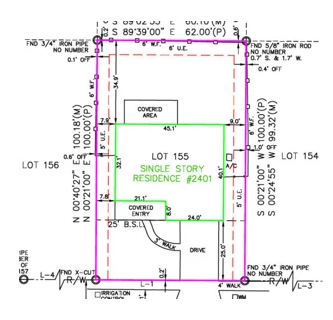
Do I Need a New Survey When Buying a House in Texas?

Do I Need a New Survey When Buying a House in Texas?

Maybe—but not every Texas home purchase requires a brand-new survey.

A seller may already have an existing survey that can potentially be used in the transaction. In other cases, the buyer may obtain a new one. Whether an existing survey is acceptable can depend on the contract, changes to the property, the title company, lender requirements, and the accuracy of the existing survey.

For buyers in Johnson County and surrounding North Texas communities—especially when purchasing acreage—the survey can be one of the most important documents in the transaction.

What Does a Property Survey Show?

A residential survey generally depicts the property boundaries and improvements in relation to those boundaries.

Depending on the property and survey, it may identify things such as:

Survey Item Why a Buyer Should Care
Property boundaries Shows the surveyed limits of the property
House/improvements Shows their relationship to boundary lines
Easements May affect where or how property can be used
Fences May reveal that a fence and surveyed boundary differ
Building lines Can affect future improvements
Encroachments May identify improvements crossing certain lines
Other improvements Pools, shops, garages, sheds, etc., when reflected

For a typical subdivision home, the survey might look relatively straightforward.

On five or ten acres outside Cleburne or Godley, however, access easements, fences, barns, shops, pipelines, utilities, and other matters can make understanding the property much more important.

Can We Use the Seller’s Existing Survey?

Potentially.

Current TREC contract language provides a mechanism for a seller to furnish an existing survey along with the applicable affidavit or declaration. TREC revised its forms to allow use of the T-47.1 Declaration, which does not require notarization, as an alternative to the T-47 affidavit in applicable situations.

But possessing an old survey does not automatically mean it will be acceptable.

If significant improvements have been added since the survey was completed—or the survey otherwise does not accurately depict the property—a new survey may be necessary or advisable.

Who Pays for the Survey?

This is a contract question, not a universal Texas rule that one side always pays.

The parties negotiate the applicable provisions of the sales contract.

That is one reason we discuss survey issues while structuring the offer instead of waiting until the title company asks about them later.

Why Does the Survey Matter So Much on Acreage?

Suppose you're buying five acres outside Godley.

There's a beautiful shop at the back of the property, a fence running along one side, and a gravel driveway that appears to lead directly to the county road.

Those things may look perfectly normal during a showing.

But you still want to understand:

Where are the actual boundaries?

Does the driveway cross another tract?

Is there a recorded access easement?

Where are utility easements located?

Does the fence follow the surveyed property line?

This is why rural-property due diligence is different from simply walking through the house and deciding whether you like the kitchen.

What Changed in the Texas Contract?

TREC updated Paragraph 6C beginning with the 2025 contract revisions. Among other changes, the contract language recognizes the T-47.1 Declaration and changed provisions concerning a buyer obtaining a new survey.

TREC subsequently adopted another generation of contract forms effective July 1, 2026, including the current One to Four Family Residential Contract (Resale), Form 20-19.

That date matters because buyers and sellers searching online can easily find articles discussing older versions of Texas contracts.

A Survey and a Title Policy Are Not the Same Thing

These documents serve different purposes.

A survey physically depicts relevant aspects of the property. A title commitment identifies matters affecting title, subject to its terms, exceptions, and requirements. A title insurance policy provides contractual title coverage according to the policy.

Texas title insurance premiums are regulated by the Texas Department of Insurance. New basic premium rates became effective March 1, 2026.

Buyers should review both the survey and title information rather than assuming one makes the other unnecessary.

Buying a Home or Acreage in North Texas?

A house can look perfect while the documents tell you something you would never notice during a showing.

Our job isn't simply to find you a property. It is to help you work through the contract, title, survey, inspection, appraisal, financing, and closing process so you understand what you're buying.

Search North Texas homes with Texan Heritage Realty Group

Frequently Asked Questions

How old can a Texas survey be?

There is not a simple universal rule that a residential survey becomes unusable merely because it reaches a certain age. Its acceptability depends on the circumstances, including whether it still accurately depicts the property and whether it satisfies applicable transaction, title, and lender requirements.

If the seller has a survey, do I automatically have to accept it?

No. The applicable contract provisions, survey condition, title requirements, financing, and negotiated terms all matter.

What if a fence isn't on the property line?

Don't automatically assume that a fence establishes legal ownership. Review the survey and title information and seek appropriate professional or legal guidance if a boundary issue exists.

Should I get a new survey when buying acreage?

Acreage often presents more boundary, access, easement, fence, and improvement questions than a typical subdivision lot. Whether a new survey is necessary depends on the specific property, but it deserves careful attention.

Does a survey tell me whether I can build a shop or pool?

Not by itself. Easements, setbacks, deed restrictions, HOA restrictions, zoning or municipal rules, septic requirements, and other limitations may also matter.

Who should interpret a complicated boundary dispute?

A real estate agent can help identify issues in a transaction, but legal boundary disputes and interpretation of property rights should be handled by an attorney and, where appropriate, a licensed survey professional.

Before You Buy, Understand What Comes With the Property

The house is only part of what you're buying.

Texan Heritage Realty Group represents buyers throughout Johnson County and surrounding North Texas communities, including residential, new-construction, rural, and acreage transactions.

Start your North Texas home search

About Jason Cech

Jason Cech is a Broker Associate with Fathom Realty and team leader of Texan Heritage Realty Group. With approximately a decade in the business and more than 550 personal closings, Jason and his team help buyers navigate both traditional residential purchases and the additional due diligence that often accompanies North Texas acreage and rural property.

Integrity. Tradition. Excellence.


Texan Heritage Realty Group is affiliated with Fathom Realty. This article is general educational information and is not legal, surveying, title, lending, engineering, or tax advice. Contract requirements and property circumstances vary. Consult the appropriate professional regarding your transaction. Equal Housing Opportunity.

Aug. 25, 2026

How Does the Texas Homestead Exemption Work After You Buy a House in 2026?

How Does the Texas Homestead Exemption Work After You Buy a House in 2026?

If you bought a home in Texas—or you're about to—the homestead exemption is one of the first property-tax benefits you should understand.

For 2026, an eligible Texas residence homestead receives a $140,000 exemption from its value for school-district taxation, and some cities, counties, school districts, and special districts offer additional local exemptions.

That doesn't mean Texas subtracts $140,000 from your purchase price or sends you a $140,000 tax credit.

It reduces the portion of your home's value subject to certain property taxes.

Here's how it works for homeowners in Johnson County and across North Texas.

What Is a Texas Residence Homestead Exemption?

Texas property taxes are based largely on the taxable value assigned to your property and the tax rates of the local taxing entities serving it.

A residence homestead exemption removes a qualifying amount of your home's value from taxation.

For school-district taxes, the mandatory general residence homestead exemption is currently $140,000.

Some local taxing entities can also adopt an optional homestead exemption of up to 20% of a property's appraised value, subject to statutory rules. Counties collecting certain farm-to-market or flood-control taxes also provide a $3,000 residence homestead exemption for those taxes.

So your exact savings depend on where the property is located.

Two homes with identical values can have different property-tax bills because they're located in different cities, school districts, counties, or special taxing districts.

How Much Is the Texas Homestead Exemption in 2026?

For an eligible general residence homestead:

Exemption 2026 treatment
School district general homestead $140,000
Local city/county/special-district option Up to 20%, if adopted
Certain county FM/flood-control taxes $3,000
Age 65+ or disabled school exemption Additional $60,000
100% disabled veteran May qualify for total exemption under applicable law

The Texas Comptroller's current property-tax guidance confirms both the $140,000 general school-district exemption and the additional $60,000 school exemption for qualifying homeowners who are age 65 or older or disabled.

What Does a $140,000 Homestead Exemption Actually Save?

This is where buyers sometimes get confused.

Suppose, purely as an illustration, your home's taxable value before the general school homestead exemption were $400,000.

For the school-district portion of the tax calculation:

Example Amount
Value before general school homestead exemption $400,000
General school-district exemption -$140,000
Remaining value for that portion of school taxation $260,000

That does not mean your entire property-tax bill is calculated on $260,000.

Other taxing entities have their own exemptions and tax rates.

The actual savings depend on your specific appraisal, exemptions, and taxing jurisdictions.

That's why I caution buyers against using a generic online property-tax percentage when estimating a payment on a North Texas home.

Can I Claim a Homestead Exemption if I Buy a House After January 1?

Potentially, yes.

Texas changed its law several years ago so qualifying homeowners purchasing after January 1 don't necessarily have to wait until the following tax year to receive a residence homestead exemption.

The Texas Comptroller's deadline guidance states that property acquired after January 1 may receive an exemption under Section 11.13 for the applicable portion of that tax year immediately upon qualification when the preceding owner didn't receive the same exemption for that year.

This is especially important for buyers who have heard the old advice:

“You can't homestead it until next January.”

That blanket statement is outdated.

Your appraisal district determines eligibility, so file with the appropriate district after purchasing and occupying the home as your principal residence.

Where Do I Apply for a Homestead Exemption in North Texas?

You apply through the county appraisal district where the property is located, not through your Realtor, lender, title company, or the Texas Comptroller.

For our primary service area, that may include the appraisal district for Johnson, Tarrant, Hood, Parker, Ellis, Hill, Somervell, or another county.

The Texas Comptroller provides the statewide application form and guidance, but the local chief appraiser determines qualification.

A word of caution:

You don't need to pay a private company simply to file a standard homestead exemption application.

New homeowners frequently receive official-looking mail after closing offering to file property documents for a fee. Read those solicitations carefully.

What Information Will I Need?

The Texas Comptroller's Form 50-114 is the statewide Application for Residence Homestead Exemption.

Requirements depend on the circumstances, but applicants generally need to establish ownership, occupancy, and eligibility.

Your driver's license or state-issued identification should also reflect the residence you're claiming when required by applicable law.

If ownership isn't reflected in conventional recorded property records—for example, certain heir-property situations—additional documentation may be necessary.

When Is the Homestead Exemption Deadline?

The Comptroller currently states that the general exemption application deadline is before May 1.

But missing that date doesn't necessarily mean the exemption is gone forever.

Texas Tax Code Section 11.431 allows a late residence homestead application to be filed within the statutory late-filing period, generally no later than two years after the delinquency date for the taxes involved.

If you've owned and occupied your home but forgot to apply, don't automatically assume it's too late.

Contact your appraisal district.

Does the Homestead Exemption Keep My Property Value From Increasing?

No.

The exemption and the homestead appraisal limitation are related concepts, but they're not the same thing.

The exemption reduces taxable value.

Texas also has limitations affecting how quickly the appraised value used for taxation can increase on an established residence homestead, subject to Texas law and qualification requirements.

That distinction becomes especially important immediately after a purchase because buyers sometimes assume the previous owner's taxable value will simply transfer to them.

It doesn't work that way.

A home's prior tax bill is useful information, but it isn't necessarily a reliable forecast of what your future bill will be after purchasing.

Why Buyers Need to Look at Taxes Before Making an Offer

Property taxes affect your monthly payment just as surely as principal, interest, and homeowners insurance.

On a financed purchase, lenders commonly escrow property taxes as part of the monthly payment.

If the initial tax estimate is too low, you can experience an escrow shortage later.

That's why we encourage buyers to evaluate:

Purchase price + interest rate + insurance + estimated property taxes + HOA/PID/MUD obligations where applicable

rather than asking only:

“What's the mortgage payment?”

For a deeper look at the cash required to purchase, read our guide on How Much Money Do I Need to Buy a $350,000 House in Texas?

If you're considering a home in Johnson County or the surrounding North Texas area and want help estimating the real monthly cost before you make an offer, contact Texan Heritage Realty Group. We'll help you evaluate the property, taxes, financing, and other costs together.

Frequently Asked Questions: Texas Homestead Exemptions

How much is the Texas homestead exemption in 2026?

The mandatory general residence homestead exemption for school-district taxation is currently $140,000. Other exemptions may apply depending on your age, disability or veteran status, and local taxing entities.

Do I have to wait until January 1 to file after buying a Texas home?

Not necessarily. Texas law allows qualifying owners who acquire a residence after January 1 to potentially receive the exemption for the applicable portion of that tax year when statutory conditions are satisfied. Your local appraisal district determines eligibility.

Does a $140,000 homestead exemption reduce my home's market value by $140,000?

No. It doesn't change what your home is worth on the open market. It exempts $140,000 of qualifying value from school-district taxation. Other taxing jurisdictions and exemptions are calculated separately.

Is the homestead exemption automatic when I buy a house?

Don't assume so. Homeowners generally apply through their local appraisal district. The Comptroller provides Form 50-114 for residence homestead applications.

Can I file for a Texas homestead exemption late?

Texas law permits late residence homestead applications within specified statutory periods. Section 11.431 generally allows an application up to two years after the delinquency date for the relevant taxes.

Do homeowners over 65 get an additional Texas exemption?

Qualifying homeowners age 65 or older receive an additional mandatory school-district exemption. The current Texas Comptroller guidance reflects an additional $60,000 exemption for qualifying homeowners who are age 65 or older or disabled.

Can I have homestead exemptions on two Texas houses?

A general residence homestead is tied to your qualifying principal residence. You shouldn't assume you can designate multiple properties as your residence homestead. Special situations should be discussed directly with the appraisal district or a qualified tax professional.

Buying the house is only part of the equation. Understanding what it costs to own it matters just as much. If you're comparing homes anywhere in Cleburne, Burleson, Joshua, Godley, Fort Worth, Granbury, Weatherford, or surrounding North Texas, contact Texan Heritage Realty Group and we'll help you run the numbers before you make the decision.

About Jason Cech

Learn More About the Team

Jason Cech is the Owner and Broker Associate of Texan Heritage Realty Group in Cleburne, Texas, with nearly a decade of real estate experience helping families buy and sell across Johnson County, Fort Worth, and North Texas. A multi-year DFW Real Producers honoree and experienced broker associate, he leads Texan Heritage Realty Group with a client-first approach built on integrity, tradition, and excellence.

Fathom Realty · 817-776-8319


Equal Housing Opportunity. Jason Cech, Broker Associate, Fathom Realty, licensed by the Texas Real Estate Commission (TREC). TREC: Information About Brokerage Services | TREC: Consumer Protection Notice. This article is general information only and doesn't constitute legal, tax, or financial advice. Property-tax laws, exemptions, appraisal values, and local tax rates can change. Confirm eligibility and amounts with the applicable county appraisal district and your tax professional.

Aug. 24, 2026

What Do I Have to Disclose When Selling a House in Texas?

If you’re selling a home in Cleburne, Burleson, Godley, Joshua, or elsewhere in North Texas, one of the first documents you may be asked to complete is a Seller’s Disclosure Notice.

For many residential sales in Texas, disclosure isn’t simply a courtesy—it is required by Texas law. The bigger issue for sellers, though, is understanding what needs to be disclosed, what doesn’t, and why trying to minimize a known problem can create a much bigger problem later.

Texas Property Code §5.008 establishes disclosure requirements for many sales of previously occupied single-family residences. There are also statutory exceptions, so sellers should not assume the requirement applies—or does not apply—without reviewing their specific situation.

What Is a Texas Seller’s Disclosure?

The Seller’s Disclosure Notice gives a buyer information about the property based primarily on the seller’s knowledge.

It is not a warranty that the property is perfect, and sellers generally are not expected to become home inspectors.

Instead, the seller is answering questions about the property and disclosing known conditions.

That distinction matters.

If you genuinely do not know something, that is different from knowing about a condition and failing to disclose it.

What Types of Things Are Disclosed?

Depending on the applicable disclosure form and property, sellers may be asked about items such as:

Property Area Examples
Structural components Foundation, roof, walls, ceilings
Mechanical systems HVAC, electrical, plumbing
Water/sewer Public water, well, septic
Property conditions Previous water penetration or flooding
Environmental issues Certain environmental conditions or remediation
Improvements Additions or modifications
Legal/property matters Easements, lawsuits, boundary issues, or other applicable matters

The form should be read carefully rather than treated as another stack of paperwork to sign.

Do I Have to Disclose an Old Problem That Was Repaired?

This is where sellers frequently get nervous.

Imagine that several years ago you had a plumbing leak. The leak was professionally repaired, the damaged materials were replaced, and there has been no recurrence.

A seller may think:

“It’s fixed, so why bring it up?”

But if the disclosure asks about a previous condition, the fact that it was repaired does not necessarily make the history irrelevant.

In practice, documentation can help.

If you have invoices, warranties, engineering reports, foundation documents, roof receipts, plumbing invoices, or remediation paperwork, gather them before the property is listed.

The objective isn't to scare a buyer. It is to give the buyer accurate information and documentation showing what happened and what was done.

What About Mold Remediation?

Texas real estate forms have become more explicit on this subject.

TREC’s 2025 contract revisions added language addressing Texas requirements concerning certain mold remediation certificates issued during the preceding five years.

If your property has had professional mold remediation, tell your agent early so the appropriate documents and disclosure requirements can be reviewed.

Are There Exceptions to the Seller’s Disclosure Requirement?

Yes.

Texas law contains exceptions for certain transactions. That is why statements such as “every seller has to complete one” are too broad.

Certain transfers involving estates, foreclosures, fiduciaries, family members, new construction, and other circumstances may be treated differently under the statute.

Your agent can help identify the issue, but questions about whether a particular statutory disclosure obligation applies to you may require advice from a Texas real estate attorney.

Can a Seller Just Write “Unknown”?

“Unknown” should mean exactly that.

It should not be used as a convenient substitute for an uncomfortable answer.

If you know that the roof leaked, the foundation was repaired, or water entered the house, pretending you have no knowledge can create a far larger issue than simply explaining what happened.

A well-documented repair can actually give a buyer confidence.

An undisclosed problem discovered later tends to do the opposite.

What Should I Do Before Listing My North Texas Home?

Before your listing goes live, spend some time assembling the property's history.

Look for:

  • repair invoices and transferable warranties;
  • roof replacement documentation;
  • HVAC service or replacement records;
  • foundation reports;
  • plumbing repairs;
  • septic or well records where applicable;
  • insurance-related repair documentation;
  • permits or records for significant improvements; and
  • surveys and other property documents.

This is particularly useful in Johnson County and surrounding areas, where our inventory includes everything from newer subdivision homes to older Cleburne properties, acreage, septic systems, wells, workshops, barns, and rural improvements.

The more unusual the property, the more important it becomes to understand exactly what is being sold.

Disclosure Is Only One Part of Preparing to Sell

A strong listing strategy starts before photographs are taken.

Pricing, condition, disclosures, documentation, repairs, staging, and marketing all affect how confidently a buyer views the property.

If you're considering selling in Johnson County or the surrounding North Texas area, Texan Heritage Realty Group can walk through the property with you, discuss what should be addressed before listing, and prepare a pricing and marketing strategy.

Request a home valuation from Texan Heritage Realty Group

Frequently Asked Questions

Do I have to disclose a foundation repair in Texas?

If the applicable disclosure asks about the condition or prior repair and you have knowledge of it, it should be answered accurately. Having engineering reports, repair invoices, and transferable warranty information can be especially valuable to a future buyer.

Do I have to disclose a previous roof leak?

Do not assume that repairing a leak automatically makes its history irrelevant. Read the disclosure question carefully and answer based on your actual knowledge.

Does the seller’s disclosure replace a home inspection?

No. A disclosure represents information from the seller; an inspection is an independent evaluation performed for the buyer. Buyers should still conduct appropriate due diligence.

Can my real estate agent fill out my disclosure for me?

The information is the seller's representation about the property. Your agent can explain the transaction process and the form, but the seller should provide the factual answers concerning the seller's knowledge.

What happens if I discover something after completing the disclosure?

Tell your agent promptly. A disclosure may need to be updated or additional information may need to be provided depending on the circumstances.

Should I disclose something even if I'm unsure whether it's important?

Bring it to your agent's attention rather than making that judgment alone. If it involves a legal disclosure question, an attorney may need to advise you.

Thinking About Selling?

The best time to identify potential disclosure, repair, pricing, or presentation issues is before your home hits the market, not after you're under contract.

Texan Heritage Realty Group helps homeowners throughout Johnson County and the greater North Texas area prepare strategically for the market.

Talk with Texan Heritage Realty Group about selling your home

About Jason Cech

Jason Cech is a Broker Associate with Fathom Realty and team leader of Texan Heritage Realty Group, serving Johnson County and communities throughout North Texas. Jason has approximately a decade of real estate experience and has personally closed more than 550 transactions. Texan Heritage Realty Group provides buyer and seller representation with an emphasis on local knowledge, communication, negotiation, and hands-on transaction management.

Integrity. Tradition. Excellence.


Texan Heritage Realty Group is affiliated with Fathom Realty. Information in this article is provided for general educational purposes and is not legal, tax, lending, inspection, engineering, or other professional advice. Real estate contracts and individual circumstances vary. Consumers should consult the appropriate licensed professional regarding their specific situation. Texas law requires real estate license holders to provide certain notices and disclosures. Equal Housing Opportunity.

Aug. 24, 2026

Fort Worth Growth: What It Means for Housing

Fort Worth added roughly 71,000 residents between 2020 and 2024, making it the fastest-growing large city in the U.S. over that period. That sustained growth has shifted the housing market toward more balance, with rising inventory and moderate price gains replacing the intense bidding wars of 2021-2022.


What does Fort Worth's population growth mean for the housing market?

Fort Worth added roughly 71,000 new residents between 2020 and 2024, making it the fastest-growing large city in the country over that stretch. That level of demand reshaped the housing market in real ways: inventory tightened, prices climbed, and competition intensified. But by late 2024 and into 2025, the market began to rebalance, giving buyers more options and sellers a more realistic pricing environment than the frenzy of 2021-2022.

Fort Worth's Growth by the Numbers

The scale of Fort Worth's expansion is hard to overstate. According to a January 2025 report citing Texas Demographic Center projections, the city was home to nearly 990,000 residents as of January 2024, after welcoming about 71,000 new residents in the four years since the 2020 census. That's not a slow creep; that's a city reshaping itself in real time.

The City of Fort Worth's official population page confirms that among the 30 most populous U.S. cities, Fort Worth has been the fastest-growing since 2020, with 11.9% growth over the last five years. As of August 2026, that remains the most current official city summary available.

And the growth isn't slowing down. The City of Fort Worth's comprehensive planning document projects that the city will grow by more than 270,000 additional people over the next 24 years from its 2023 baseline of 935,508. City planners are already designing infrastructure, transportation corridors, and housing capacity around that expectation. The Texas Demographic Center's Vintage 2024 Population Projections, the most current official state forecast as of August 2026, reinforce that Tarrant County and the Fort Worth metro will see substantial continued growth through 2030 and beyond.

For context, a national data aggregator, World Population Review, estimated Fort Worth's population at approximately 1,008,605 in 2024, with 13.61% cumulative growth since the 2020 census. That figure is a modeled estimate rather than an official government count, but it aligns directionally with city and state data. The authoritative sources remain the City of Fort Worth and the Texas Demographic Center.

Where the Growth Is Pushing Development

Rapid population growth doesn't land evenly across a city. Based on the city's own comprehensive planning documents and state demographic projections, development pressure is concentrated in north Fort Worth, far southwest toward Crowley, and along major corridors reaching toward Parker and Denton counties. I work across a lot of these edges every week, in areas like Burleson, Godley, Joshua, and Aledo, and the pace of new construction activity in these corridors reflects exactly what the planners are forecasting.

For buyers, this matters because it shapes where new inventory is actually coming from. For sellers in established neighborhoods closer to the core, it means competition from new builds is real and worth factoring into your pricing strategy.

What the 2024 Growth Meant for Buyers and Sellers

The housing story of 2024 in Fort Worth was really a story of transition. The ultra-competitive, multiple-offer environment that defined 2021-2022 began to ease as inventory climbed back toward more normal levels. That shift continued into early 2025, showing that the trends taking shape in 2024 had real staying power.

What that transition looked like in practice: buyers gained back negotiating room they hadn't had in years. Closing date flexibility, repair requests, and concessions became possible again. Sellers who priced realistically still moved their homes, but the days of pricing above market and watching offers pile up were largely over by late 2024.

For the longer view on how this plays out across Johnson and Tarrant counties, I'd point you to this breakdown of what local buyers need to know in 2026, which picks up where the 2024 trends left off.

The Apartment and New Construction Pipeline

One of the clearest signals of how seriously developers took Fort Worth's growth trajectory was the surge in multifamily construction. New apartment communities, many with resort-style amenities, came online across submarkets including downtown, the West 7th corridor, near Alliance in north Fort Worth, the Medical District, and along the I-35 corridor. This expanded rental supply gives newcomers more options when they first arrive, which is relevant for the housing market overall because it absorbs some demand that might otherwise compete directly for for-sale inventory.

New single-family construction also remained active, particularly in the outer suburbs I mentioned above. If you're a buyer weighing a new build versus an existing home, that's a comparison worth making carefully. The guide to the best areas to buy in Johnson and Tarrant County on my site walks through how to think about that tradeoff based on how you actually want to live.

What Sellers Need to Know About the Texas Disclosure Process

In a growing market where buyers are moving from out of state or across the metro, transparency about a property's condition matters more than ever. In Texas, sellers of previously occupied single-family homes are generally required to deliver the TREC Seller's Disclosure Notice, a statewide form that covers material facts and the physical condition of the property. This requirement stems from Section 5.008 of the Texas Property Code, and the current form applies to contracts entered into on or after September 1, 2023. Statutory exceptions exist, including certain new construction, estate, and trustee sales, so confirm your situation with your agent or attorney.

In practice, I walk my sellers through this form early in the listing process, often before we go live on the market. It protects you, it sets buyer expectations, and it tends to make negotiations smoother because there are fewer surprises after the inspection.

How the Closing Process Works in North Texas

For buyers and sellers new to Texas, the closing process here runs through a title company, not an attorney's office (as is common in some other states). The title company handles escrow, the title search, the title commitment, lender coordination, document preparation, and disbursement of funds at closing. Earnest money is deposited with the title company after contract execution, and the title commitment is issued after the title search clears any liens, judgments, or other issues in the chain of title.

In a typical North Texas transaction, after the option period and inspection phase, the timeline from contract to close runs roughly 30 days, though this varies based on financing type and title complexity. Which title company is named in the contract, and how certain fees are allocated between buyer and seller, is negotiable rather than fixed by law. Your agent and your contract terms govern that, not a statewide formula.

Growth Metric Figure Source / Period
New residents added, 2020-2024 ~71,000 Texas Demographic Center via Fort Worth Star-Telegram, Jan 2025
Population as of Jan 2024 ~990,000 Texas Demographic Center via Fort Worth Star-Telegram, Jan 2025
5-year population growth rate 11.9% City of Fort Worth official population page
Most recent annual growth rate 2% City of Fort Worth official population page
Projected additional residents (next 24 years from 2023 baseline) 270,000+ City of Fort Worth Comprehensive Planning, 2023

All figures above are sourced from official city and state documents or cited reports; see inline links throughout this post for direct sources.

Every buyer's and seller's situation is different, and the only way to know how these market dynamics apply to your specific property or search is to run the numbers with someone who knows this market. That's exactly the kind of conversation I have with clients before we do anything else.

If you're ready to see what's available or get a read on what your home is worth in today's market, start here with a free home valuation or property search.

You can also read what past clients have said about working with my team on Google, Zillow, and Realtor.com.

Frequently Asked Questions

Is Fort Worth still one of the fastest-growing big cities, and how has that affected home prices?

Yes. According to the City of Fort Worth, it has been the fastest-growing city among the 30 most populous in the U.S. since 2020, with 11.9% growth over five years. That sustained demand kept prices elevated compared to pre-pandemic levels, but by 2024 the pace of appreciation moderated as inventory rose, shifting the market from a frenzy to a more balanced environment.

How many people moved to Fort Worth between 2020 and 2024, and what does that mean for housing demand?

According to a January 2025 report citing Texas Demographic Center data, Fort Worth added about 71,000 new residents between 2020 and 2024. That level of in-migration created sustained demand for both for-sale and rental housing, drove new construction at the city's edges, and kept competition for well-priced existing homes meaningful even as the market cooled from its 2021-2022 peak.

Is Fort Worth a buyer's market or a seller's market right now?

As of August 2026, Fort Worth has moved toward a more balanced market compared to the extreme seller's market of 2021-2022. Inventory has risen from historic lows, giving buyers more choices and negotiating room than they had a few years ago. That said, well-priced homes in strong locations still move. The specific dynamics in your price range and neighborhood matter a lot, and that's worth discussing with a local agent who tracks the data week to week.

Are more new construction homes and apartments coming to Fort Worth?

Yes. Developers responded to Fort Worth's rapid population growth with significant multifamily construction across several submarkets, including downtown, the Alliance area, the Medical District, and the I-35 corridor. New single-family construction also remained active in the outer suburbs, including areas in southwest Tarrant County and neighboring Johnson County. The Texas Demographic Center's Vintage 2024 projections suggest this pipeline will need to continue to keep pace with long-term growth forecasts.

What is the Texas Seller's Disclosure Notice, and what do Fort Worth homeowners have to share with buyers?

The Texas Real Estate Commission (TREC) Seller's Disclosure Notice is a statewide form that sellers of previously occupied single-family homes are generally required to deliver to buyers, covering material facts and the physical condition of the property. It's required for contracts entered into on or after September 1, 2023, under Section 5.008 of the Texas Property Code. Statutory exceptions apply, so confirm your situation with your agent or a real estate attorney.

How does Fort Worth's growth compare with Dallas, Austin, and other Texas cities?

Fort Worth outpaced other major Texas cities in raw population growth between 2020 and 2024, adding about 71,000 residents over that period according to Texas Demographic Center data. While Austin and Dallas also grew significantly, Fort Worth's combination of relative affordability (compared to Austin in particular), available land for development, and proximity to the broader DFW employment base made it a consistent top destination for both in-state and out-of-state movers.

The Bottom Line

Fort Worth's growth story is real, it's documented, and it has direct consequences for anyone buying or selling here. The market that emerged from 2024 is more balanced than the pandemic-era frenzy, but demand is still underpinned by one of the strongest population growth rates of any major U.S. city. Navigating that market well means working with someone who understands both the data and the neighborhoods. That's what my team at Texan Heritage Realty Group does every day across Fort Worth, Burleson, Cleburne, Aledo, and the surrounding communities.

Get your free home valuation or start your home search here.

About Jason Cech

Jason Cech is the Owner and Broker Associate of Texan Heritage Realty Group in Cleburne, Texas, with over 9 years of real estate experience helping families buy and sell across Johnson County, Fort Worth, and North Texas. A DFW Real Producers Top 500 Agent and multi-year top producer, he leads his team with a client-first approach built on integrity, tradition, and excellence.

Fathom Realty · 817-776-8319

Equal Housing Opportunity. Jason Cech, Broker Associate, Fathom Realty. Licensed by the Texas Real Estate Commission (TREC). Information About Brokerage Services | Consumer Protection Notice. This article is general information only and does not constitute legal, tax, or financial advice. Confirm your specific numbers and situation with your attorney, tax advisor, lender, or closing officer.

Posted in Market Updates
Aug. 22, 2026

Meet the Team: Heather Widner, Client Concierge

Meet Heather Widner: Client Concierge Specialist with Texan Heritage Realty Group

A great real estate experience takes more than finding the right house, negotiating a contract, or putting a SOLD sign in the yard.

Once a property goes under contract, there are deadlines to track, lenders and title companies to communicate with, inspections to coordinate, documents to manage, and clients to keep informed.

That's where Heather Widner comes in.

As the Client Concierge Specialist for Texan Heritage Realty Group, Heather works behind the scenes to help keep transactions organized and moving forward while making sure our buyers and sellers know what's happening along the way.

Her goal is simple: make every client feel informed, supported, and cared for from contract to closing.

A Johnson County Native Serving Her Community

Heather is a proud Texas native who has spent most of her life in Johnson County.

Because this is her community, the people our team serves aren't simply names attached to transaction files. They're neighbors, families, business owners, and members of the same communities where Heather lives and raises her family.

That local connection is one of the reasons personalized service is so important to her.

Heather believes every client deserves prompt communication and individual attention, regardless of whether they're purchasing their first home, selling a longtime family property, or completing their tenth real estate transaction.

What Does a Client Concierge Specialist Do in Real Estate?

Many consumers understandably assume their real estate agent personally handles every administrative detail of a transaction.

On a well-structured real estate team, however, specialists can be assigned to different parts of the process so important details receive the attention they deserve.

Heather's role begins primarily behind the scenes once a client is moving through the transaction process.

She helps coordinate communication among the different professionals involved, keeps an eye on important deadlines, provides updates, and works with the rest of the Texan Heritage Realty Group team to keep the transaction organized.

Think of it as another layer of support for the client.

Your agent remains your advocate and advisor, while Heather helps make sure the machinery behind the transaction keeps moving.

Keeping Clients Informed

One of Heather's most important responsibilities is also one of the simplest:

Communication.

Buying or selling a home can become stressful when clients don't know what's happening.

Has the lender received everything?

What's happening with title?

When is the inspection?

What comes next?

Is there something I'm supposed to be doing?

When will we know we're ready to close?

Clients shouldn't have to chase down answers to basic questions about their own transaction.

Heather works with our agents and transaction partners to help buyers and sellers stay informed throughout the process.

Coordinating the People Behind a Real Estate Closing

A real estate transaction involves far more people than the buyer, seller, and two agents.

Depending on the transaction, there may also be a:

  • Mortgage lender
  • Title company
  • Home inspector
  • Appraiser
  • Surveyor
  • Insurance agent
  • Home warranty company
  • Contractor
  • Septic or well professional
  • Other vendors or specialists

Each person has a different responsibility, and many parts of the transaction depend on something else happening first.

Heather helps coordinate those moving pieces.

That can mean communicating with lenders and title companies, tracking important milestones, working with inspectors and vendors, and helping ensure that details don't simply disappear between contract and closing.

Why Transaction Coordination Matters

A signed contract isn't the finish line.

In many ways, it's the beginning of the most detail-intensive portion of the transaction.

Texas real estate contracts contain important dates and deadlines. Financing must progress. Title work needs to be completed. Inspections and due diligence occur. Appraisals may be required. Documents need to be reviewed, and closing preparations have to come together.

Missing an important detail can create unnecessary stress—or a much bigger problem.

Heather's attention to detail provides another set of eyes on the transaction.

She describes what she does rather appropriately as managing “organized chaos.”

With real estate deadlines, lenders, title companies, agents, inspectors, clients, and vendors all moving at once, that's sometimes exactly what it is.

Personalized Service Instead of an Assembly Line

One danger of a busy real estate business is allowing clients to start feeling like transaction numbers.

That's exactly what Heather works against.

Her standard is to make every client feel like they're the top priority.

That doesn't mean pretending there's only one transaction happening. It means creating systems and accountability so every client receives the communication and attention they deserve.

It's also one reason Texan Heritage Realty Group operates as a team.

Instead of expecting one real estate agent to prospect, answer every inquiry, market listings, negotiate contracts, communicate with lenders, coordinate closings, manage deadlines, and perform every administrative task personally, we have people dedicated to different portions of the client experience.

Heather is an important part of that system.

Supporting Our Agents Means Supporting Our Clients

Heather's role doesn't replace the real estate agent.

It makes the agent more effective.

By helping coordinate transaction details and communication, Heather allows our Lead Agents to spend more time doing the work clients specifically hired them to perform:

Advising. Negotiating. Showing property. Evaluating offers. Solving problems. And representing the client's interests.

Meanwhile, Heather helps keep the details behind those activities organized.

It's the difference between hiring an individual agent who happens to have support and hiring a real estate team intentionally structured around the client experience.

That's an important distinction in how we operate.

Four Years Behind the Scenes of Real Estate Transactions

Heather has spent the past four years helping coordinate the details that keep real estate transactions moving forward.

That experience has given her a unique perspective.

Most consumers buy or sell homes only occasionally. Heather sees the transaction process repeatedly.

She understands where confusion commonly occurs, what questions clients tend to have, and where proactive communication can prevent unnecessary stress.

Sometimes exceptional client service isn't a dramatic gesture.

It's simply answering the question before the client has to ask it.

Life Outside Texan Heritage Realty Group

Heather is also a busy mom of three: two teenage sons and a young daughter.

So if coordinating lenders, title companies, inspectors, agents, and closing deadlines sounds chaotic, she's had plenty of practice managing competing priorities.

When she does find some downtime, Heather enjoys spending time with family and friends.

Her combination of organization, attention to detail, and genuine interest in taking care of people makes her a natural fit for the Client Concierge role.

Frequently Asked Questions About Heather Widner

Who is Heather Widner?

Heather Widner is the Client Concierge Specialist for Texan Heritage Realty Group. She helps coordinate transaction details and communication for the team's buyers and sellers.

Is Heather Widner a real estate agent?

Heather serves in a client concierge and transaction coordination role for Texan Heritage Realty Group. Clients primarily work with their Lead Agent for real estate representation and advice, while Heather provides additional transaction and communication support.

What does Heather do during a real estate transaction?

Heather helps communicate with clients and transaction partners, coordinate with lenders and title companies, track important details and deadlines, and keep buyers and sellers informed as their transaction progresses toward closing.

When will a Texan Heritage Realty Group client hear from Heather?

Clients may hear from Heather throughout the transaction as she provides updates, helps coordinate important steps, and works alongside their agent and other professionals involved in the closing.

Does Heather work with both buyers and sellers?

Yes. Heather's Client Concierge role supports both buyers and sellers working with Texan Heritage Realty Group.

How long has Heather worked in real estate?

Heather has approximately four years of experience working behind the scenes to help coordinate real estate transactions and client communication.

Where is Heather from?

Heather is a Texas native and has spent most of her life in Johnson County.

What Does Having a Real Estate Team Mean for You?

When you hire Texan Heritage Realty Group, we don't believe you should have to depend on one person trying to do everything.

You have a Lead Agent responsible for representing your interests and guiding your real estate decisions, with professionals such as Heather working behind the scenes to support the process.

It's part of our commitment to delivering the level of service behind our team's philosophy:

We don't just practice real estate the best we can. We practice real estate the best it can be done.

For Heather, that means paying attention to the details, communicating proactively, and making sure clients know someone is paying attention to what happens next.


Texan Heritage Realty Group | Fathom Realty
Integrity. Tradition. Excellence.
Serving Cleburne, Johnson County, and surrounding North Texas communities
texanheritage.com